Bobby Womack’s albums The Poet (1981) and The Poet II (1984) were two of my favourite 80s releases, but I’ve not heard much else from Womack apart from the wonderful Across 110th Street, the mid 80s When the Weekend Comes and the co-write of The Rolling Stone’s It’s All Over Now.
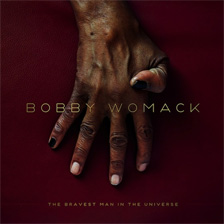
The Bravest Man in the Universe is the first album of new material since the mid 1990s, and follows on from his 2010 Gorillaz appearance.
Damon Albarn and Richard Russell have to take a lot of credit for the direction this album has taken. Free of old-time soul cliches, the arrangements and instrumentation underpin some of Womack’s finest vocal performances.
The 68 year old soul singer has a new gritty tone to his vocals, that sit perfectly with the glitchy electronic backing to most of the songs.
Please forgive my heart could easily have sat on one of the classic Poet albums from the 80s, but where those tracks were quite conservative in their arrangement, the 2012 Womack tracks rely heavily on drum machines, decaying piano and dub bass.
Womack’s guitar playing on the end of Please forgive my heart and it’s following track, Deep River is sparse, honest and under-played. My only criticism is that his guitar playing should have featured more on the album.
Lana Del Rey duets with Womack on one of the albums key tracks, Dayglo Reflection. A sample of Sam Cooke speaking also features on the song, which has echoes of trip-hop’s finest band, Portishead.
Whatever happened to the times is build around a cheap, haunting organ refrain, and distorted, echo-laden vocals and has a spirit of experimentation rarely heard in the soul genre. This is the second time Womack has recorded this song – the first version was on 1985’s So Many Rivers album. The 2012 take simply blows the original out of the water. Stripped of Van Halenesque lead guitar and a gutteral vocal on the 80s original, the 2012 version pushes the emotion to the fore, and is no doubt the definitive recording of this song.
The late Gil Scott-Heron features on the intro to Stupid, a breakbeat driven song featuring bittersweet lyrics that appear to take aim at corrupt preachers.
The album fades a little toward the end, with Love is gonna lift you up feeling a little too light in comparison with the preceding tracks. Luckily the album picks up again with Nothin’ Can Save Ya, featuring Malian singer Fatoumata Diawara and the albums closing track, the soul standard Jubilee (Don’t Let Nobody Turn You Around).
So whilst both Poet albums will always hold a special place in my heart, The Bravest Man in the Universe has alreadybecome my favourite Bobby Womack album, and is one of my favourite albums of 2012. A career highlight, you bet!
Buy Bobby Womack – The Bravest Man In The Universe from Amazon
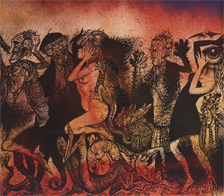
Storm Corrosion is the collaboration between no-man / Porcupine Tree‘s Steven Wilson and Mikael Åkerfeldt of Opeth.
Their self-titled album is released on Roadrunner, and has been described as being part of a trilogy (Opeth’s Heritage and Wilson’s Grace for Drowning being the other two albums).
Stripped of the metal flavouring of some of the duo’s work in their main bands over recent years, Storm Corrosion is a natural progression from both Heritage and Grace for Drowning.
The heavy guitars may not be in evidence, but the music remains dark, atmospheric and at times almost sounds like the soundtrack to a twisted, avant-garde European film that’s yet to be made.
Opener Drag Ropes has hints of the minimalism of no-man’s together we’re stranger album in the end section (especially with the light-touch percussion), and features some delicious string arrangements by Dave Stewart. The vocals are shared between Åkerfeldt and Wilson, with Åkerfeldt taking the lead for most of the song.
“I was immortal but I am your friend To stay and be beside you”
The album’s title track takes it’s rhythm from the backing of gentle rain and distant thunder, and features Wilson on lead vocals. It’s a song of two halves – the gentle, mostly acoustic opening section soon mutates into a twisted, clattering diversion, before the strings and guitar return for the end of the song.
“Someone is calling her shorewards”
Elements of the real world seep into some of the songs – the weather in the title track, laughter in Hag, and on several occasions, you can hear the musician’s react to their performance, which displays a real sense of spontaneity in these recordings.
Hag is a mellotron and piano heavy piece, and features some off-kilter drums from Gavin Harrison, and a nagging bass-line.
Happy is the albums shortest track, and lyrically, doesn’t live up to it’s name! Like most of the tracks on the album, Happy starts off fairly serene, lulling you into a false sense of security, before disturbing strings usher in a darker section.
As you would expect from a Wilson / Åkerfeldt collaboration, the production and mix is immaculate. Mastered at a sympathetic level, highs and lows appear organic and are given space to breathe and hit you on an emotional level, which does not really happen with the current trend for brickwall, in your face mastering.
Lock Howl is an instrumental track, with one of the guitar riffs reminding me of a late 60s Pretty Things track, that I can’t quite put my finger on. Give me time, I’ll identify it!
Lock Howl shifts and changes several times during it’s 6 minute stay, sometimes exuding a middle-Eastern flavour and again making use of a poweful, emotive string arrangement.
The final (and longest) track on the album is Ljudet Innan, featuring a fine falsetto lead vocal from Åkerfeld in the first section. After a few listens (the CD only arrived from Burning Shed today), this is shaping up to be my personal favourite track on the album. Its a classic album closer, and the middle section (with some fine guitar-work from Åkerfeldt) lifts your mood after the much darker tracks that came before.
The title in English is “ancient music” which fits the song perfectly. The mid-section’s spacey, choral synths give way to a bluesey end section, with truenorth (no-man) influenced scattering percussion, before passing the lead vocal baton back to Wilson. Both Åkerfeld and Wilson’s reverb-heavy vocals on this track tread new ground, displaying an almost soulful feel.
Whilst I think Storm Corrosion will appeal to fans of later Opeth and Porcupine Tree, the album thankfully has its own unique identity. An Opeth / Porcupine Tree hybrid would have been a safe option, and probably a disappointment. This multi-layered, pastoral flavoured debut release from Storm Corrosion offers hope for further albums from the duo, and reveals new depths on repeated listens.
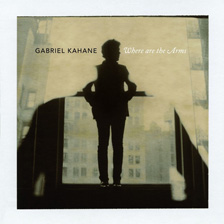
I had never heard of Gabriel Kahane, until I saw mention of his song Charming Disease by one of my favourite singer-songwriters, the mighty Gavin Castleton. And what a track this it turned out to be!
Lyrically, it’s a sad tale of fighting alcoholism, set to music containing delicious aching strings, guitar and piano, and reminding me a little of Leeds artist Lone Wolf.
Listen to a stream of Charming Disease from the Gabriel Kahane bandcamp page below.
“You were sneaking out with little lies, in the morning by the market, for a good time You tried to hide it by the lemon trees, I took you home and took away your keys.”
Merritt Pkwy is the tale of a chance meeting and a relationship that ends as quickly as it starts. The song could well be a continuation of the story from the previous track. The tracks are even linked by a string section that could be acting as a bridge between the two lyrics.
“And I say now what I said then please let me forget you In some hot one gas station town please let me forget you”
There are shades of Sufjan Stevens and Rufus Wainwright in Kahane’s music, and although he comes from a classical background, this album is a mixture of pop and indie. It’s true there are shifting time signatures, string sections and theatrical touches, but the album will appeal to those who like intelligent pop music. Nothing is throwaway, every note is carefully considered and exists for a reason.
The track LA opens with a picked guitar refrain, typical of many signer-songwriters, but is uniquely under-pinned by a baroque piano-part.
“LA The selfish city wins again.”
Watch the video for LA below
Last Dance is a heart-wrenching song of loss and regret. Regret for the words that were not spoken, the final experiences that could not be shared, and the aching desire to share a lover’s touch one last time.
“all I want is a face to hold and love and light and sex and cigarettes”
Icebox name-checks New York land-marks that don’t quite resonate with a South-east London boy like me, but the imagery paints a picture of travelling through cities and people watching that is universal.
Winter Song has some wonderful double-bass and electric piano in the middle section of the song, recalling early 70’s John Martyn, and is topped off by a lovely flute arrangement.
“scratching out a past we don’t remember much words come apart like tendon shattered bone”
Where Are The Arms is an ambitious album, covering several genres, often within individual songs, and stands up to repeated listening. Each song is a portrait, with common themes such as regret, isolation and missed connections (Merritt Pkwy is a prime example).
March of Ghosts is Norwegian progressive band Gazpacho‘s 7th studio album, and the second for the excellent Kscope (home of Anathema, no-man, Steven Wilson, Porcupine Tree & The Pineapple Thief) record label.
The album opens with the instrumental Monument, which seques into Hell Freezes Over I – with its naggingly addictive guitar line and jittery percussion intro setting the scene for the album.
March of Ghosts is a mixture of progressive elements with an over-riding pop sensibility. Whereas a lot of modern progressive music uses keyboards, particularly the mellotron, to decorate recordings, Gazpacho use violin and real strings which add a sense of warmth to their compositions.
Black Lily is one of the most immediate tracks, with a killer chorus, whilst still underpinned with the recurring guitar motif from earlier in the album.
Gold Star adds a celtic feel to the music, that continues through several songs, with some lovely percussive bells, and brass instruments (and possibly accordians somewhere in the mix), so it’s clear the band are keen to steer clear of obvious and cliched instrumentation.
Mary Celeste is one of my favourite tracks on the album, reminding me a little of Peter Gabriels OVO soundtrack at times.
“When they found us on the water They didn’t see our faces I hear the voices in the warmth But we can’t get outside”
The inclusion of uilleann pipes works surprisingly well towards the end of Mary Celeste. After suffering uilleann pipes in THAT Celine Dion Titanic song, that’s a sentence I never thought I would write.
Listen to Gazpacho – March of Ghosts (Album Montage)
What Did I Do? is built around a simple, uncluttered arrangement, coated with rich warm vocal harmonies from Jan Henrik Ohme on the chorus. Oh dear, I’m starting to sound like I’m reviewing the other Gazpacho, the spanish soup!
The Dumb has a wonderful middle section, with dreamy descending piano over a gorgeous fretless bass-line.
“Stories left untold…”
The albums longest track closes the album, as Hell Freezes Over IV brings back the main guitar riff that under-pins the album, and March of Ghosts ends on it’s heaviest arrangement.
The bands Thomas Andersen describes the theme of the album – ‘The idea was to have the lead character spend a night where all these ghosts (dead and alive) would march past him to tell their stories.’
The lyrical themes are not too obvious, and leave plenty of room for personal interpretation, which is always a good sign for music that can be re-visited and re-discovered.
Love and Endings is a recording of no-man‘s concert at the Leamington Spa Assembly in October 2011, as part of the record label Burning Shed’s 10th anniversary celebrations.
For the those not yet familiar with no-man, they are a British band comprising Tim Bowness and Steven Wilson (Porcupine Tree). Formed in 1987, no-man have produced a fine back-catalogue of work, and boast guest appearances from the likes of King Crimson‘s Robert Fripp and Pat Mastelotto, Porcupine Tree’s Colin Edwin, Richard Barbieri and Gavin Harrison, jazz musicians Theo Travis and Ian Carr, electronic artists Scanner and Faultline, Bruce Kaphan (American Music Club) and Dave Stewart (Egg/Hatfield & The North). Former members of 80s band Japan – Steve Jansen, Richard Barbieri & Mick Karn, toured and recorded with the band in the early 1990s.
Since the early 1990s, the band have existed mainly as a studio outfit, rarely venturing into the live arena, so no-man live shows are hugely anticipated events. As well as capturing one of the finest no-man live performances, Love and Endings is also a perfect introduction to the band’s music for the uninitiated. For people already familiar with the band’s music, Love and Endings may come as a surprise, as the live incarnation of the band is a powerful beast.
Recent studio releases from no-man have included twisted, dark electronica (the Wild Opera album), fragile, semi-acoustic / minimalist songs with stark lyrics (Together We’re Stranger) through to their most organic release in 2008’s Schoolyard Ghosts. Recent no-man live appearances, though few and far between, hint at a new direction, and one that will appeal to fans of Steven Wilson’s work in Porcupine Tree.
Opening track my revenge on seattle is very electronic, awash with percussive synths in it’s studio incarnation, but the Love and Endings live version is stripped back, with deep chorused bass, textured guitar and mournful violin. The joyous middle section showcases some wonderful interplay between the musicians and powerful tom / cymbal work from drummer Andrew Booker.
“maybe there’s more to life than just righting wrongs maybe not”
time travel in texas is another song from the mid-90’s Wild Opera album, with the 2011 live version losing it’s scratchy Portishead trip-hop atmosphere, mutating into a brooding, twin-guitar heavy assault.
all the blue changes is a more percussive take on the track that originally appeared on 2003’s Together We’re Stranger album. One of the highlights of the live set, with my favourite Bowness vocal on the album and some fine layered keyboards from Stephen Bennett.
“giving up on beautiful and making peace with strange, all the blue changes rearranged”
The song shifts up a couple of gears with some brutal Wilson guitar and pounding Booker drums around 3/4 of the way through, sounding like Sigur Rós on steroids or the wall of noise of Mono, I swear you can hear the audience gasp before applauding at the end!
The formerly sample-driven pretty genius is reinvented as a much looser song on love and endings, but remains true to the spirit of the original version, with some beautiful violin work by Steve Bingham, and a great sloping back-beat from Messrs Morgan and Booker.
lighthouse is my favourite no-man song, and the love and endings live version does not disappoint. It’s no-man’s most progressive sounding track, and although originally written in the early 1990s, has not aged at all. I’ve said it before, and I’ll say it again, the section of the song from 4:08 onwards is one of my favourite pieces of music of all time. It never fails to move me.
Have a listen to the Love and Endings version of lighthouse, taken from the official no-man SoundCloud, below.
“the love and endings, the almost starts”
beaten by love is a previously unreleased no-man track, written in 1987 and performed for the first time at this show. The track displays hints of some of the darker This Mortal Coil tracks mixed with a healthy dose of Siouxsie & the Banshees, and is unlike any recent no-man material.
Following the darkest track on the album with one of the most uplifting no-man songs, wherever there is light, works well, and shows the range in singer Tim Bowness’s vocals (from beaten by love‘s growl to the soft, breathy croon on this emotive and deeply personal song).
“Jane passes through the crowds outside the mercury lounge. she loves the city sounds. she feels that she’s been found.”
The live version of mixtaped is a lot looser than the Schoolyard Ghosts studio take, with some inventive percussive touches, and a wonderful mixture of textures and distorted, heavy guitar from Wilson and Bearpark, and works well as a set closer.
“you’d kill for that feeling once again”
The final track on the album was the encore on the evening, things change. The highlight of the live version of this track has always been the electric violin solo that is an integral part of the powerful outro. The version on Love and Endings is very different from previous live outings, watch the filmed version on the accompanying DVD to appreciate the performance fully.
“you walk upon the dirt and chocolate wrappers, leaving me behind you.”
Love and Endings DVD
Love and Endings also comes with a DVD of the whole performance. The Love and Endings DVD is a very different concert film to the previous live no-man DVD, 2009’s mixtaped, which was a multi-camera shoot.
The HD footage shot by Dion Johnson (of Signify films) captures the performance and the mood of the show perfectly on just two cameras. It was filmed from the front-row of the audience, so you get a real feeling of being in the crowd, and this gives a different perspective to most live films.
The mixtaped DVD does offer a better variety of shots, and more close-ups of individual band members, features a full-length concert and an excellent no-man documentary, so perhaps should not be compared to the DVD that comes with Love and Endings. The Love and Endings film, although it has a few awkward zooms and camera angles that might not normally be kept in an official release, does capture a band performance that was better than the one on the previous DVD, and so is definitely a worthwhile addition to the no-man discography.
The concert was not filmed with a DVD release in mind but the footage came out better than was expected, and the ‘guerilla style’ does give the recording its own, unique identity and captures the performance perfectly, and so offers good value for money as an added extra.
The extra content on the DVD is a photo gallery – with an instrumental version of the live version of mixtaped as background music.
Watch the promotional video for the album / DVD below.
Love and Endings sees no-man’s core duo of Tim Bowness (vocals) and Steven Wilson (guitar) joined by classical violinist Steve Bingham and regular collaborators Michael Bearpark (guitar), Andrew Booker (drums & backing vocals), Stephen Bennett (keyboards) and Pete Morgan (bass).
Tracklist
my revenge on seattle (6.02) time travel in texas (4.51) all the blue changes (6.10) pretty genius (3.58) lighthouse (8.16) beaten by love (3.58) wherever there is light (5.09) mixtaped (9.32) things change (8.24)
The Love and Endings CD / DVD is available from The Burning Shed.
For more information on no-man, visit the no-man website, like no-man on Facebook and follow no-man on Twitter.
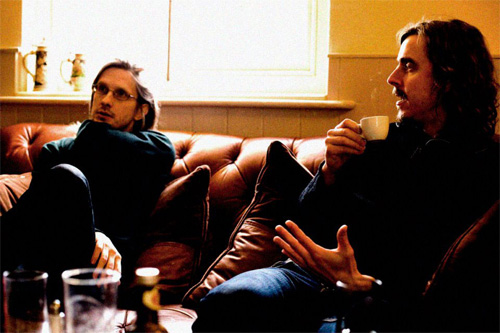
The pictures of Tim Bowness & Steven Wilson courtesy of Charlotte Kinson.
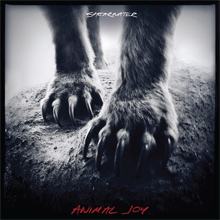
The follow-up to 2010’s The Golden Archipelago is the Austin, Texas bands first on new label Sub Pop.
A more accessible album (mainly due to stronger, much more direct songs in my opinion), album opener Animal Life rolls along, topped with a Robert Fripp-esque guitar wail.
Breaking the Yearlings follows the Shearwater trait of being a homage to nature, animals (yearlings are young horses) and birds and this song with it’s full-on drums and 60’s organ riff, is another to add to the list.
Unusually for Shearwater, there are bluesey elements to some of the guitar parts on this album, particularly on the track Dread Sovereign.
The albums key track is You As You Were, which is already shaping up to be my favourite Shearwater track. Hammered piano over a metronomic kick drum gives way to a sweetly sequenced synth line, and a rapidly building frenzied vocal that leaves you breathless by the end of this powerful song.
Don’t take my word for it, have a listen to a stream of the track, from the Shearwater SoundCloud account, below.
“When you fell in the rocks At a bend in the river With the blood from your nose Running hard on your fingers And through the rest of your life.”
Insolence sounds like Raintree Crow meets late period Talk Talk (come on, how could I write a Shearwater review without mentioning singer Jonathan Meiburg’s resemblance to Mark Hollis?) and Immaculate starts off sounding like Dr Feelgood until the vocals kick in, which was a bit of a surprise.
The drums and percussion are very prominent and high in the mix on this album, so on occasions the atmosphere / space usually found in Shearwater songs is toned down a little, but it’s forgivable when you hear songs as strong as You As You Were and Open Your Houses.
Run the Banner Down displays a lighter touch, compared to the majority of the album, with a delicate picked guitar and gentle tom and percussion work that gives the song its unique pace.
The album closes with Star of the Age, which is perhaps a little too “lighters in the air” for my liking and a track I won’t return to as often as others on this album. The penultimate track Believing Makes it Easy would have been a more fitting ending to Animal Joy, but if a track like Star of the Age brings the music of Shearwater to a wider audience, it’s a small price to pay for getting music of this quality out to a more mainstream audience.
Trent Reznor & Atticus Ross – The Girl With The Dragon Tattoo
Trent Reznor’s third recent collaboration with Atticus Ross (the other two being the Academy Award winning The Social Network soundtrack and the post NIN band How to Destroy Angels) is the soundtrack to the David Fincher directed The Girl With The Dragon Tattoo.
The album is framed by a bookend of cover versions – the opener is a cover of Led Zeppelin‘s Immigrant Song, which is probably already one of the most played songs this year, featuring in the trailer for the film that has received millions of YouTube viewings. Featuring Karen O from Yeah Yeah Yeahs on vocals, its the most guitar heavy piece on the soundtrack. Bar the final track, the rest of the album is made up of dark, ambient, atmospheric instrumental music.
Reznor & Ross worked together during the latter Nine Inch Nails years, most notably on the Ghosts I-IV album, so this dark electronica is a continuation of their previous work. An early highlight on this 39 track release is What If We Could?, a gentle piano piece that stands out from the darkness of the preceding music. With The Flies follows, and is one of the most disturbing tracks on the album, with an incessant buzzing hinting at what are probably gory visuals in the forthcoming film.
A Thousand Details is an uptempo NIN-like romp, but the parts of the album I enjoy the most are the atypical, softer pieces, of which One Particular Moment is a particular highlight. The bar-room piano motif is underpinned by soft synth pads that give way to razor sharp buzz synths. Please Take Your Hand Away continues with the bar-room piano and adds some eerie, discordant flute to the orchestration.
The Same As The Others is another highlight – with a simple guitar refrain, and whistling wind effects. While Waiting stands out due to the rare use of voice – but still no words. The Seconds Drag ticks along at a metronomic pace, underpinned by bells and a nagging guitar line. Bells feature on many tracks on this soundtrack, and are one of the key sounds that repeat and re-arrange themes throughout the album.
Parallel Timeline With Alternate Outcome is a slow-burning piano led track that starts to change when the buzzing flies previously used appear and lead to a disturbing end to the track.
The album closes with the second vocal track, and the second cover version, in the shape of Bryan Ferry‘s Legend track from 1986, Is Your Love Strong Enough?, performed on this soundtrack by How to Destroy Angels. This haunting version, stripped of the clunky 80’s snare of the original, is a fine end to the album. It’s the only track featuring vocals from Reznor (towards the end of the song) and does make you hanker for a new Nine Inch Nails album (which may be on the cards for 2012).
Obviously, the main aim of a soundtrack is to accompany visuals, heightening tension, and strengthening the viewers emotional response to scenes, but sometimes soundtracks work as stand-alone listening experiences. For me, this album joins Ryuichi Sakamoto‘s Merry Christmas Mr Lawrence and Clint Mansell‘s Black Swan as non-song based soundtracks that can be enjoyed in isolation of their accompanying films.
The soundtrack is available from the Nine Inch Nails website or iTunes, with a CD release on the 26th December, to tie-in with the film’s release.
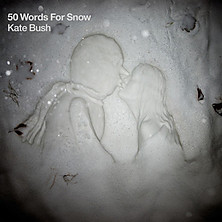
So here it is, the 10th studio album from Kate Bush and the second release this year. The last time Kate released two albums in one year was in 1978, when The Kick Inside & Lionheart were released.
The Directors Cut, a revisiting of material from earlier albums The Sensual World and The Red Shoes, was released earlier this year. The Directors Cut to me was in some ways the soundtrack to a tour that never was, an album that reworked songs in a way that Kate might have done if she had taken the tracks out of the studio environment and onto the live stage.
50 Words For Snow is an entirely different beast – 7 brand new songs clocking in at just over an hour, and unlike The Directors Cut, an album that demands repeated listening. It’s also unlike any other Kate Bush album.
Opener Snowflakes rides on a soft synth pulse and simple piano, with hushed, reverb-drenched vocals, subtle strings and guitar.
“The world is so loud, keep falling, I’ll find you.”
Previous Kate Bush albums sound as if they have been put together over many months, or even years, whereas this album sounds very organic, with spaces that in the past may have been filled with instrumentation. 50 Words For Snow uses these spaces to create a unique atmosphere, perfectly in keeping with the glacial theme.
Lake Tahoe starts off like a long-lost Blue Nile track, and features male choral vocals alongside Kate’s. There are a couple of very unique moments during Lake Tahoe, when the song stops, and after Kate exhales, starts again, which give the impression that you are there, in the room, listening to the performance as its being recorded.
“They say some days, up she comes, up she rises, as if out of nowhere. Wearing Victorian dress. She was calling her pet, “Snowflake! Snowflake!” Tumbling like a cloud that has drowned in the lake.”
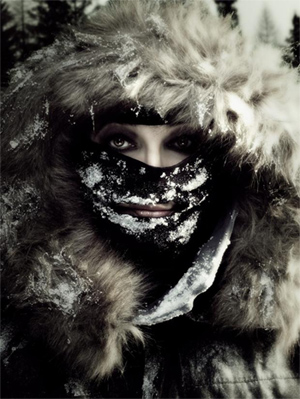
The song references the story of a woman who fell into the water, and in later years is seen rising from the lake. The songs focus of attention then shifts to a faithful pet dog, waiting for his owner to return, searching for her, pining for her as he gets more frail. Gorgeous minimal strings underpin the middle section of this song to great effect. Lake Tahoe is one of the saddest songs you will hear all year, and a real highlight of the album.
I won’t talk too much about the subject matter of Misty, other than to say I’ll never be able to watch Raymond Briggs The Snowman again without blushing. To some, this may be this albums Mrs. Bartolozzi moment, but Misty really captures that silent, deepest winter feel, and features some lovely double-bass and playful jazz drumming.
“He won’t speak to me.
His crooked mouth is full of dead leaves.”
The strings are sublime on the latter half of this track, which due to its length (over 13 minutes) has the space to develop fully, with off-kilter piano and guitar added to the increasingly frenetic ending, as the subject of the song looks for her now departed ice-cold lover.
Wild Man was released as the first single from the album, and is the most conventional track on 50 Words For Snow. Sitars, chorused guitar and whispered vocals take centre-space on this song, unlike the piano led arrangements of the rest of the album. It breaks up the intensity, a little light relief from the emotion of the rest of the album. At times, the percussion almost seems to echo Kate’s 1980 single December Will Be Magic Again. I’m not sure if that was the intention?
“Lying in my tent, I can hear your cry echoing round the mountainside. You sound lonely.”
Wild Man on Youtube
Snowed in at Wheeler Street is my favourite track on the album. Kate’s voice is now deeper and with a more husky timbre at times, which suits this song, a duet with Elton John, perfectly. A recurring theme of losing people – lost in the London Fog, in the 9/11 attacks, in the city’s crowded streets, run through this powerful, deeply haunting track.
“I still have your smiling face, in a heart-shaped frame…We look so good together.”
I wonder if the title Snowed in at Wheeler Street is a nod to the Thomas Dolby track Cloudburst at Shingle Street? Both songs have a similar synth sequence underpinning the track as well.
The title track 50 Words for Snow features Kate encouraging Stephen Fry to list 50 different expressions for the word snow. Backed by what sounds like mid-period Siouxsie & The Banshees, this track is heavily percussive and extremely playful, as Kate encourages the wordsmith Fry “Come on man you’ve got 44 to go!”. It works surprisingly well.
The album ends with Among Angels – another song that gives the impression of being an intimate live performance, with just you and the song. As the strings arrive, the feel of the album seems to change, almost as if the first shoots of Spring are arriving. A lovely end to the album.
As a fan of Kate’s music from way back in 1978, it’s comforting to hear an album as ambitious, as lyrically eccentric and as rewarding as this, so far into her history. 50 Words For Snow is an intense listening experience, this is not background music, and it’s not the sort of album to be scattered amongst other tracks in your playlist.
It’s early days yet, but this could turn out to be one of Kate’s finest albums.
Tracklist: Snowflake Lake Tahoe Misty Wild Man Snowed in at Wheeler Street 50 Words for Snow Among Angels
The last Thomas Dolby studio album was Astronauts & Heretics back in 1992, so to say A Map Of The Floating City is long-awaited is a bit of an understatement.
There have been a couple of live releases and re-issues in recent years (notably the wonderful collectors edition of The Flat Earth in 2009) but the silence with regards to new music was finally broken last year with a couple of digital EP’s available from the official Dolby website. 6 of the EP tracks appear on A Map Of The Floating City. Whilst they work perfectly well as album tracks, it’s a slight disappointment that the album is not made up of more new music, but after such a long wait, it’s only a minor complaint.
Album opener Nothing New Under The Sun kicks off with a bassline that’s vaguely reminiscent of The Jackson’sCan You Feel It, and this is the only real nod towards the 80’s on the album.
“Hey any fool can write a hit loop me a breakbeat baby I’ll tweak it till it fits”
A wonderful rhythm guitar line from long-time Dolby collaborator Kevin Armstrong drives the song. The Princealike dirty bubbling synths introduce Spice Train, a track that sits better on the album (as a standalone single it never really hit me). The Eastern promise of the strings and backing vocals work well with the travelogue lyrics.
Evil Twin Brother, with it’s New York fire sirens, Shaft guitars and themed lyrics really set the scene for the song. Much like the way I Love You Goodbye from Astronauts & Heretics, with it’s crickets and thunder gave a real cajun flavour, Evil Twin Brother gives a real feel of the at times claustrophobic New York city vibe.
“They say that New York city never sleeps But I think they’re only talking about me it’s 3am and ninety-five degrees.”
The album is split into three themed sections. The final track that makes up the first section (Urbanoia) is A Jealous Thing Called Love, a lovely latin-tinged song of regret and betrayal, featuring Bruce Woolley (co-writer of Video Killed The Radio Star with Trevor Horn and Geoff Downes of The Buggles) on backing vocals.
Amerikana is the second section of the album, which starts with Road To Reno.
“He was a crooked politician she sold brassieres at Sears he said he liked The Beatles And she liked Tears for Fears”
A tale of a Badlands styled road-trip, that’s never going to end with chocolates and flowers, although Mars bars get a mention in the lyrics. The guitar has a real Dire Straits circa Communiqué era feel, which is apt as Mark Knopfler features a couple of tracks later.
The Toad Lickers is a banjo and jaw harp (from Imogen Heap) led song about “a group of crazed eco-hippies in the Welsh mountains who get high on Bufo alvarius and creep into the local town after hours in search of munchies” according to Thomas on his website. Glad he cleared that one up, as otherwise I’d have no idea what on earth this strange song is about. The track features backing vocals from Adele Bertei (who provided the soaring vocals on Dolby’s Hyperactive! from 1984, pop-pickers, not toad-lickers).
17 Hills is the longest track on the album, and is up there with Screen Kiss as one of my favourite Dolby songs. Featuring the afore-mentioned Mark Knopfler on guitar, this evocative track always reminds me of the wide-open spaces of California, and the hills overlooking the urban sprawl of Los Angeles. 17 Hills features some lovely fretless bass work from Jeffrey Wash.
“The city rises on seventeen hills seventeen hills from the Bay The silhouette of those beautiful hills is right at the end of this old stormdrain.”
Love Is A Loaded Pistol ends this section of the album and is the most stripped back track, with just Dolby and a string section. I’ll let Thomas explain the inspiration for this song:
“The idea came to me in a dream: I had a nocturnal visitation from Billie Holiday who traveled through time to give me a song lyric. Of course, I was amazed and I was overjoyed. She was in an evening gown and looking ravishing. She sat next to me and said ‘I’ve got a lyric for you.’ I said ‘Great, hit me!’ She said ‘Okay…..This time it’s love.’
I smiled awkwardly. There was a pause. Then I said ‘erm…. well it’s a bit crap, isn’t it?’ She looked dejected and asked why. I said there had to be half a dozen songs with that title over the years, not that any particular one sprang to mind. ‘Well you can make it cool, right?’ Suddenly the waking me got very upset with my dream me and interjected some diplomacy. I mean here I was with one of the greatest singers that ever lived, and I just told her her idea was crap. I started to say something like ‘Look, I’ll try to work your lyric in….’ but it was too late. Billie was fading and I felt myself waking up…”
Oceanea is the final themed section of the album, which starts with the song of the same name. Featuring Eddi Reader on vocals, it’s a beautiful, haunting song that even includes what sounds to me like, shock-horror, some auto-tune effects on Dolby’s vocals, not in a Cher way you understand, but just a subtle inflection on certain words. The lyrics are the most moving on the album, and Oceanea is definitely the personal highlight of the album for me.
Simone, with its theremin intro from Bruce Woolley, has a lyrical twist that I won’t give away here, and at times reminds me of Aja period Steely Dan or maybe even early Prefab Sprout (who Dolby first worked with on the Steve McQueen album in 1985).
The album ends with To The Lifeboats, with its lovely rolling drums from Pat Mastelotto and haunting acoustic guitar, sounds of the sea and a not very positive end for the subject of the song, by the sounds of things.
Hopefully the warm critical response to this album will mean there won’t be such a long wait until the next Thomas Dolby album.
Slow Electric is a new collaboration between Tim Bowness (no-man), Peter Chilvers (Bowness/Chilvers & Brian Eno) and the Estonian group UMA (Aleksei Saks and Robert Jürjendal). The album features Tony Levin (King Crimson / Peter Gabriel) on two tracks.
This album came together when the four musicians played at a festival in Estonia in late 2010. The basis of this album comes from live recordings of the 2010 shows, with re-recorded vocals and added keyboards, plus the contributions from Tony Levin on Towards the Shore & Days Turn into Years.
Towards The Shore / Towards an Ending is a strong opener. Towards The Shore dates back to a previous Bowness band, Plenty and was written in 1986. The 2011 version is beatless and driven by stately piano, atmospheric trumpet and scratched, percussive guitar playing, over the reflective Bowness vocal:
“Too frightened of your feelings Too frightened of the light You stripped away the meanings gave in without a fight… You never moved away”
Listen to the video edit of Towards The Shore below:
Criminal Caught In The Crime was originally written to be part of the follow-up to the Bowness/Chilvers California, Norfolk album. One of the few tracks driven by any sort of percussion, the glitchy beats contrast the smooth electronics of the song, and the vocal is bookended by atypical Bowness backing vocals.
Days Turn Into Years was one of the standout tracks on the 2002 Bowness/Chilvers album California, Norfolk. This version by Slow Electric is the definitive take on the song. The bedsit drama is given a much more elegant treatment that matches the sadness and decay of the lyrics. At times, sounding like something from David Sylvian‘s Secrets of the Beehive before veering off into a more freeform structure, with vocal loops cascading over the beats, Days Turn Into Years is the highlight of the album for me, and a wonderful reinvention of one of my favourite songs of the past 10 years.
Slow Electric Hum / Also Out Of Air moves from it’s ethereal instrumental opening into a This Mortal Coil referencing song, with rich, reverb heavy keys, and haunting, heavily treated trumpet.
Another Winter will be known to no-man fans as the first part of truenorth from their 2008 schoolyard ghosts album. It works well as part of this album, and features some lovely trumpet in the second part of the song that reminds me of the emotive playing of Jon Hassell on Sylvian’s Brilliant Trees.
Between The Silent Worlds ends the album on a very ambient note. No piano or beats on this track, just layers of textured guitar and looped trumpet. Evoking snow-covered landscapes, the aching atmospherics suit the reflective lyrics.
“Words become notes become words.”
As proof that the best music is not always instant, on first hearing the album several months ago, I thought this track was the weakest on the album. Several months later, and it has become one of the albums highlights, and is a perfect closer. One of those wonderful late-night soundtracks that when it hits you, hits you hard.
I hope this album from Slow Electric is not a one-off release, and I would like to hear an album of completely new songs written specifically for this project, as there are plenty of possible routes for the musicians to take.
This set of 21st century torch-songs is perfectly suited to soundtrack the change in seasons as the winter nights draw in, and should appeal to fans of David Sylvian, Robert Fripp, as well as those who are moved by the songs of Bowness/Chilvers & no-man.
Watch the Towards The Shore video below:
Video filmed, Edited and Directed by Dion Johnson
Towards The Shore / Towards An Ending (7.23) Criminal Caught In The Crime (7.43) Days Turn Into Years (9.35) Slow Electric Hum / Also Out Of Air (5.24) Another Winter (5.04) Between The Silent Worlds (6.37)


 The album opens with the instrumental Monument, which seques into Hell Freezes Over I – with its naggingly addictive guitar line and jittery percussion intro setting the scene for the album.

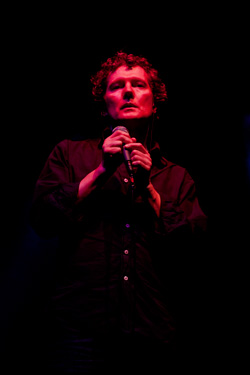 time travel in texas is another song from the mid-90’s Wild Opera album, with the 2011 live version losing it’s scratchy Portishead trip-hop atmosphere, mutating into a brooding, twin-guitar heavy assault.
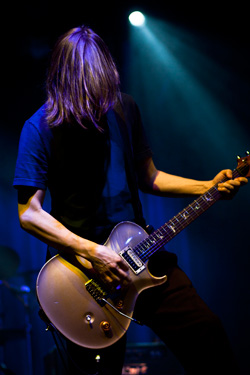 beaten by love is a previously unreleased no-man track, written in 1987 and performed for the first time at this show. The track displays hints of some of the darker This Mortal Coil tracks mixed with a healthy dose of Siouxsie & the Banshees, and is unlike any recent no-man material.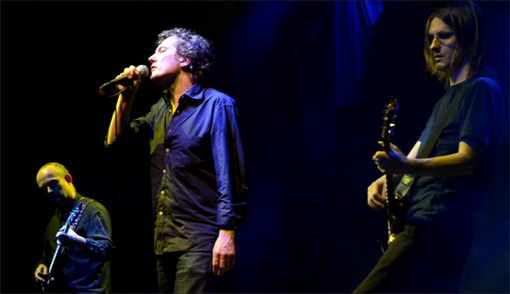


 Trent Reznor’s third recent collaboration with Atticus Ross (the other two being the Academy Award winning The Social Network soundtrack and the post NIN band How to Destroy Angels) is the soundtrack to the David Fincher directed The Girl With The Dragon Tattoo.
 A Thousand Details is an uptempo NIN-like romp, but the parts of the album I enjoy the most are the atypical, softer pieces, of which One Particular Moment is a particular highlight. The bar-room piano motif is underpinned by soft synth pads that give way to razor sharp buzz synths. Please Take Your Hand Away continues with the bar-room piano and adds some eerie, discordant flute to the orchestration.
 So here it is, the 10th studio album from Kate Bush and the second release this year. The last time Kate released two albums in one year was in 1978, when The Kick Inside & Lionheart were released.
 The song references the story of a woman who fell into the water, and in later years is seen rising from the lake. The songs focus of attention then shifts to a faithful pet dog, waiting for his owner to return, searching for her, pining for her as he gets more frail. Gorgeous minimal strings underpin the middle section of this song to great effect. Lake Tahoe is one of the saddest songs you will hear all year, and a real highlight of the album.
 The last Thomas Dolby studio album was Astronauts & Heretics back in 1992, so to say A Map Of The Floating City is long-awaited is a bit of an understatement.

 Slow Electric is a new collaboration between Tim Bowness (no-man), Peter Chilvers (Bowness/Chilvers & Brian Eno) and the Estonian group UMA (Aleksei Saks and Robert Jürjendal). The album features Tony Levin (King Crimson / Peter Gabriel) on two tracks.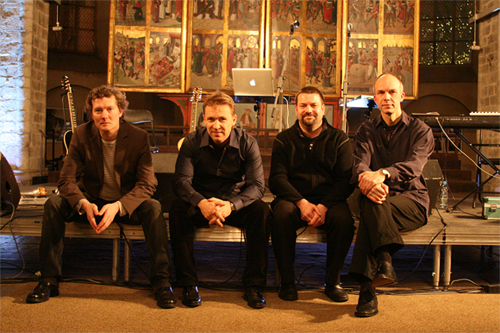


 Mr Kinski's Music Shack