Tim Bowness / Peter Chilvers – California, Norfolk

3 11 2013

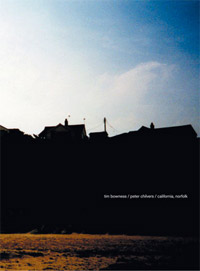
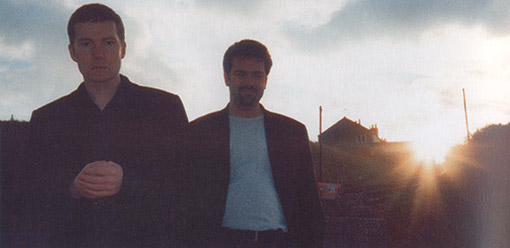
california, norfolk was the debut album from Tim Bowness (no-man/Henry Fool) and Peter Chilvers (Brian Eno/Karl Hyde). Originally released online, with no promotion and in very limited quantities in 2002, california, norfolk has been given a well-deserved deluxe-edition treatment by the Burning Shed label in 2013, and will now hopefully reach a wider audience.

disc one

california, norfolk cover

Disc one contains the original album, which is improved by the sympathetic Michael Bearpark remaster. This is not a brickwall, pump-up-the-volume remaster, but one which breathes space and separation into the original recordings.

So the bass sounds fatter, the strings cut through the mix and you hear sounds that were somewhat hidden before (such as what sounds like a clock in album opener hostage).

If you haven’t heard california, norfolk before, it’s a perfect late-night album. Echoes of The Blue Nile’s debut album filter through on hostage.

“the girl you never forgot,
went underground, defences shot”

Lyrically, hostage can be filed under the same heading of unrequited as Everything But The Girl’s sublime Missing. Both touch on memories of people who have moved on, whereas in hostage, I get the impression that the subject did not find “some better place”.

The title track has a real feel of a decaying seaside town, and reflects on the characters who remain behind when the glamour has faded.

post-its is one of my favourite songs, period. The perfect torch-song.

It’s the track I’ve played most from this album, since it’s original release 11 long years ago.  A processed old drum machine, yearning strings, and slightly off-kilter guitar serve as a perfect backdrop to some of Bowness’s most direct and emotive lyrics.

“We spent a lifetime devising plans, to waste our lives.”

post-its is a song I never tire of hearing, and it’s wonderful to hear this song again with the added clarity of the remaster.

“In this town not meant for kissing, we sat and kissed”

also out of air wasn’t one of my favourites when the album first came out, but has grown on me over the years. Some lovely Frippesque guitar on this track.

days turn into years is the bleakest song on the album. Set against a backdrop of textured synths and relentless rain bouncing off rooftops, this tale of being trapped in a situation where little changes is not for the faint-hearted.

“Photos of cats, in northern landscapes
lie on the bed, all wet with tears.”

rocks on the green is the album’s proggiest moment, with marimba, bass and guitar slowly building in intensity throughout the song. Some lovely synth lines creep into the mix towards the end.

winter with you is a track that divided listeners when the album was originally released, mainly due to the footsteps in the snow effect that runs through three quarters of the track. Personally I think this effect adds to the mood of the song, and offers an alternative rhythm that makes more sense than taking the easy option of just dropping a drum loop into a song thats so obviously rooted in the winter months.

Maybe it’s my love of snow, but around November of every year winter with you appears on my playlists. I love the sound and feel of walking through deep, fresh snow and I love sad, melancholic songs, so that’s all the boxes ticked right there.

“It never felt the way you wanted, she never came the night you cried.”

Its the longest track on the album by far, but one of those rare album epics where it doesn’t seem to last that long. Marimbas make another appearance to usher in the second part of winter with you.

“Don’t want to be a part of this.”

This track is a great companion piece to the winter-themed Iceland by All About Eve and Kate Bush’s 50 Words for Snow from 2011.

dreamer’s song end the album, and lifts the mood, like the arrival of spring. Musically uplifting, a pastoral sounding piece originally written for Henry Fool, lyrically it’s as miserable as ever, thank goodness!

Picture copyright Carl Glover

disc two

The second disc of california, norfolk is made up of a remaster of the overstrand alternate / outtakes collection, with some previously unreleased studio cuts and live recordings.

winter with you (alternate) is a snow-free zone, with fender rhodes piano and a much more chaotic string arrangement.

post-it’s (alternate) has a wonderful piano line after the first chorus, and is a good alternative take on the song, but cannot surpass the original version.

One of the highlights of the second disc is the version of sorry looking soldier (alternate), a song from the long out-of-print World of Bright Futures album, and this is one of my favourite versions of the song.

The alternate version of rocks on the green has a Mike Oldfield feel to the arrangement. world of bright futures (alternate), is a wonderful wurlitzer-like version of the Samuel Smiles song, and another great version.

criminal caught in the crime is a track that was re-recorded for the Slow Electric album from 2011, and gives a hint of what the second Tim Bowness / Peter Chilvers album might have sounded like. It’s a much more electronic piece than anything on the main california, norfolk album, and has some lovely textures and organ sounds.

Four live songs bring the second disc to a close. Hearing the songs performed with just piano and voice in a live environment shows how they have evolved over the years, and the short version of post-its is my favourite of the four live songs.

Deluxe-edition packaging

The 2013 version of california, norfolk comes in a deluxe dvd-sized digi-book, which includes sleeve notes by Tim Bowness and Peter Chilvers, plus previously unseen artwork from Carl Glover.

Buy california, norfolk from Burning Shed

Visit the Tim Bowness website


Jonathan Wilson – Fanfare

26 10 2013

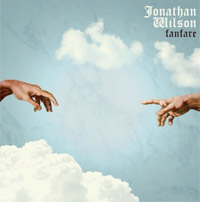
Jonathan Wilson "Fanfare"It’s been a week of Wilson’s for me – a wonderful Steven Wilson gig at the Royal Albert Hall on Sunday, and a new album from Jonathan Wilson this week.

The two Wilson’s were previously musically poles apart, with Jonathan’s 2011 album Gentle Spirit being a gentle updating of the LA / Laurel Canyon sound, there is now some common ground as the new album from the Wilson of the Jonathan variety has a more progressive feel, with echoes of ELO and Pink Floyd, particularly on the title track.

Fanfare has a much richer palette than Jonathan’s debut album, and this makes for a more rewarding listening experience.  The big drums, aching 70s strings, Fender Rhodes, sax and Floydian vocal line of the title track set the mood for the whole album, which if released in 1977 would have surely been a staple of FM radio for many years.

It’s that wonderful classic rock sound that I love, but with the clarity of 2013 recording techniques (albeit still analog recording). If you don’t immediately buy the album after hearing the stream of Fanfare above, then I will be deeply disappointed in you.

Her hair is Growing Long is a beautiful song, with Danny Thompson’esque bass, intricate guitar lines and harmonics, underpinned by deep pulsing strings, building to a heavily percussive ending.

Dear Friend has some of the best guitar work on the album, and a real live feel to the track, especially the bass / drum interplay in the song’s mid-section, and bears comparison at times to the other Wilson’s recent work in its experimentation with jazz rock structures.

The variety of styles explored on Fanfare is one of the album’s great strengths, and a case in point is Future Vision, featuring former Fleet Foxes member Josh Tillman, who delivers exquisite harmonies.

Starting off almost like a country song, Future Vision is one of my favourite tracks on the album, in no way influenced (coughs) by the fact that it mutates mid-way through into an almost mid-period Steely Dan sounding piece.

Another standout track is Cecil Taylor, which features David Crosby and Graham Nash, so you know the harmonies are going to be pitch-perfect.

“Completely alone, I remember the story
We all see the thunderbolt – we all feel the glory”

Phased vocals, simple percussion and layered picked acoustic guitar give the vocals a real space to breathe.

Illumination has shades of Neil Young, with a deep grungy groove, and a hint of Around The World In A Day era Prince psychedelia thrown in for good measure.

The crystal-clear mix and excellent instrument separation on Desert Trip highlights Jonathan’s production skills. Some fine backing vocals from Jackson Browne and Josh Tillman beef up the latter stages of this trip.

Jonathan Wilson

New Mexico conjures up a dusty, barren desert landscape, and features LA musician Omar Velasco on backing vocals.

“I couldn’t let you into my mind, I couldn’t get you out of my mind”

Lovestrong features some fine piano work from Benmont Tench (Tom Petty & The Heartbreakers, Ryan Adams, Stevie Nicks) and a guitar solo from Jonathan that David Gilmour would surely be proud to serve up.

Album closer All The Way Down reminds me a little of my favourite Ryan Adams album, Love is Hell, specifically the powerful tracks Political Scientist and The Shadowlands.

Snatches of abstract radio chatter and background noise seep through the strings, piano and guitar that follows the loping beat.

Fanfare is one of those classic albums that just begs to be played late at night, with the lights dimmed, and no distractions – put down your iPhone for an hour, and turn the music up loud.

All The Way Down is the perfect ending to what is already shaping up to be one of my favourite albums of 2013.

Buy the album on Amazon UK


Laura Groves – Thinking About Thinking EP

29 09 2013

"Thinking About Thinking" EPLaura Groves (who previously recorded under the moniker Blue Roses) has released her first new solo material since 2009, with the digital (and vinyl) release of the Thinking about Thinking EP on Deek Recordings.

The opening track, Inky Sea, has a real late night feel, with the dark rhodes piano and layered 80s keyboards reminding me of Cliff Martinez‘s Drive soundtrack.

The music has progressed from 2009’s mostly acoustic Blue Roses album, and benefits from a much wider production palette.

After the beatless opening song, Pale Shadows is driven by a tight drum machine track, and back to the 80s again, has hints of China Crisis The Cocteau Twins in the instrumentation, topped off with a very Robert Smith like guitar riff. It’s probably my favourite of the 4 tracks, with hints of Fleetwood Mac in the chorus (always a good thing!)

Sadly, a by-product of the post-CD age, it’s impossible to tell who is playing on the tracks as there are no liner notes with this digital release.

“When the walls break down, it’s a beautiful thing”

Laura Groves

Easy Way Out sneaks in a crafty bossa-nova beat and a strong bassline to underpin the complex, ever-evolving arrangement, that grabs you after repeated plays.

The title track of Thinking About Thinking slows down the tempo of the EP, and has a real USA West-Coast vibe, with hints of mid-70’s Todd Rundgren seeping through to my wise old brain.

At times, the close harmonies remind me of Prince‘s sublime Sometimes It Snows In April from the Parade album.

I hope the EP is a taster for a new album in the not-too-distant future. If you liked the Blue Roses album, or are a fan of early Kate Bush, this EP will be something you will want to investigate, so go on, treat your ears.

Buy the EP

Buy Laura Groves – Thinking About Thinking EP from Bandcamp

Other releases

Buy the Blue Roses album from Amazon

Buy the Does Anyone Love Me Now? EP (featuring Grammatics) and the excellent First Frost Night on Amazon

Buy the I Am Leaving Single (featuring the wonderful Moments Before Sleep) from Amazon


The Concise Musical Guide to the Comsat Angels

29 09 2013

The Concise Musical Guide to the Comsat AngelsThe Concise Musical Guide to the Comsat Angels is not a history of the band, but a book focussing on what really matters – the bands music and songs.

The paper-back sized (note, this is not a “coffee-table” sized book) includes a 22 page introduction that has an exclusive q & a with band members Kevin Bacon (the band’s original bassist), singer / guitarist Stephen Fellows, drummer Mik Glaisher, keyboard player Andy Peake and later years bassist Terry Todd. The q & a provides a unique insight into the band’s chemistry, and sheds light for the first time on the band’s future.

Former live guitarist Nick Robinson also gives an insider’s view of the post Jive era of the band, and also shares some memories of the band as a fellow Sheffield musician.

The main bulk of the book is a discussion of the Comsat’s studio albums, discussing the song composition, individual playing style and performances of all band members and the lyrics, interspersed with quotes from Stephen Fellows.

The Concise Musical Guide to the Comsat Angels is a fascinating glimpse inside the bands music, which encourages you to listen to the albums again, so in that sense, it does it’s job.

Mark Kermode correctly states in his introduction that the book focusses on the music, not the cliched “life on the road” tales or discussions of band’s haircuts and fashion found in many rock tomes. So if you are looking for a more straight-foward rock biography, this is not it. But if you are already a fan of the band, then The Concise Musical Guide to the Comsat Angels does offer new insights, that you will not find elsewhere.

The Concise Musical Guide to the Comsat Angels is available in two formats – with a choice of colour pictures on white uncoated paper or black and white on cream uncoated paper – and has 162 pages with 24 photographs, 3 musical scores (Sleep No More, Gone, Shiva Descending), discography, gig list and a foreword by uber-fan and renowned film critic Mark Kermode.

“Written with all the devotion and attention that the Comsats require and deserve.”

Simon Armitage

Buy The Concise Musical Guide to the Comsat Angels from The Burning Shed store.

Buy Comsat Angels music

Sleep No More (MP3 album) from Amazon

Time Considered As a Helix of Semi-Precious Stones: the BBC Sessions 1979-1984 – from Amazon

My Minds Eye from Amazon

The Glamour from Amazon

To Before from Amazon


Nine Inch Nails – Hesitation Marks

30 08 2013

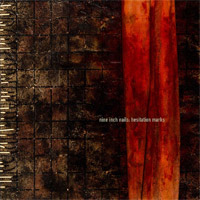
Opener The Eater of Dreams is a slow building, electronic heart beat monitor intro to the most electronic album in NIN’s eight album discography.

“I am just an echo, of an echo, of an echo…”

Nine Inch Nails "Hesitation Marks"

Copy of A gives a good taste of what lies in store – it’s an incessantly catchy track, with nagging, buzzing synths laid over a tightly tuned Blue Monday’esque drum machine.

Came Back Haunted features dark synth-lines, and a great classic NIN guitar riff halfway through the song. But you already know this, as the song has been available for over a month now.

The presence of Alan Moulder on the production side is telling with the sound of this album. Moulder  worked with Curve in the 90s, and there are some hints of the way Curve used dark electronics cut with brutal guitars on Hesitation Marks.

“Everywhere now reminding me… I am not who I used to be”

Whilst Hesitation Marks musically is a very different beast to the Nine Inch Nails of The Downward Spiral or The Fragile, lyrically its still visceral and although there are more synths than guitars, the music is still hard-hitting and atmospheric. The delivery may have changed, but there is no dumbing down or compromise on display here.

Find My Way is an early album favourite, with simple piano lines, Twin Peak’s guitar and a great Reznor vocal. Sometime’s less is more, and Find My Way is a very powerful song, different to anything I have heard from NIN before.

“Ghost’s of who we used to be. I can feel them come for me.”

All Time Low is driven by a very Talking Head’s like riff. I wonder if this is one of the tracks featuring Fleetwood Mac’s Lindsey Buckingham? I won’t know till I receive the cd on release day (this review is from the NIN website stream, so no album credits are available yet). A fairytale like synth motif bubbles away in the background as Reznor sings “We’re never gonna die, how did we get so high?”. A clever touch.

Disappointed will not leave you feeling so. Some lovely, subtle guitar playing in the background of the verses. One of the strengths of Hesitation Marks that is immediately apparent is that the tracks have layers that reveal themselves on repeated listening sessions. The last couple of minutes of Disappointed are a case in point – soaring guitars and keyboards, underpinned by nagging sequencers, drop quickly to reveal the lightly percussive melody and crisp drums. It’s like getting halfway through a really enjoyable meal and then bang, a new flavour hits your palate. And I do like a good meal!

Everything is almost NIN goes late 70s powerpop – NIN do The Knack! The heaviest and most uptempo track on the album, it’s short, sharp and to the point. It’s also the perfect length for a classic single, at 3.19.

Copyright Nine Inch Nails

Satellite and Various Methods of Escape have a mid-80s Peter Gabriel feel to the music (yes, I really did just write that), with the latter track having a very strong, addictive chorus that counteracts the world weary lyrics.

Another reference to the 1980s is the appearance of bassist Pino Palladino on the album. I can’t hear any Wherever I lay My Hat type basslines here, but his touring with The Who (or his Tears For Fears work) was probably more of a reference point for his inclusion by Reznor.

The outro to Running, if included on a previous NIN album, would be awash with heavy wall-of-sound guitars, whereas the 2013 Reznor has a singular guitar line, backed by scraping keys and insistent beats.

The scent of Bowie can also be found on Hesitation Marks. I Would for You would not have sounded out of place on Bowie’s Earthling (and we know Reznor loves I’m Afraid of Americans from that album).

In Two is another album highlight – with shades of the breakdown in March of the Pigs, though the rest of the song bears no resemblance to The Downward Spiral track. I think In Two may contain one of the Lindsey Buckingham appearances, it certainly sounds like his playing in the background as the song builds to it’s (very) abrupt climax.

While I’m Still Here brings the album full circle, back to the electronica of the opening salvo, although at a slower pace. I love the keyboard work in this track, and the sax riff at the end. Sax on a NIN album? Heresy. It seems as if the experience of the soundtrack work with Atticus Ross is being utilised to give the band more colours to choose from, which can only be a positive thing.

“Yesterday I found out the world was ending.”

Album closer Black Noise is an instrumental continuation of the previous track, and presumably is a play-on-words on white noise, with the album ending in an explosion of sound.

Hesitation Marks has the potential to become my favourite NIN album. It lacks the rage of early albums, but what is the point of repeating what’s gone before? There is so much depth revealed on repeated listening, and I think over time this will surpass Year Zero for me. One of the best releases of 2013, I certainly think so.

Order Hesitation Marks (Deluxe Edition) from Amazon UK


Joseph Arthur – The Ballad of Boogie Christ

8 06 2013

The Ballad of Boogie ChristJoseph Arthur’s 10th studio album was originally available via Pledgemusic, and will be released more widely via Lonely Astronaut Records on June 11 2013.


Album opener Currency of Love is a 50’s sounding track, that would not sound out of place in a David Lynch movie or as a song on a long-lost Roy Orbison album.

Saint of Impossible Causes has an incredibly addictive and uplifting chorus, and a move forward to the 1960’s with the sitars on the verses.

The title track is very New York sounding, complete with Lou Reed Transformer referencing backing vocals and is an essay on a modern-day messiah.

“Christ would love hip-hop, metal and soul”

What is noticeable on this album is the more expansive backing than recent Arthur releases – lush strings, horn sections and a real widescreen production are very much the order of the day.  The album’s first ballad I Used to Know How To Walk on Water is an album highlight, with a vibrant, deep bassline and jazzy piano and drums.

Wait for Your Lights is simply classic Joseph Arthur. A tight, simple beat and descending piano lines, Wait for your Lights is an instant favourite and one of the best tracks on the album.

Joseph Arthur

I Miss the Zoo is a more fully-realised take of the track that appeared on 2012’s Redemption City. An brutally honest tale of missing the high’s of a former lifestyle, to quote the lyrics “Even tho life is much better now”. A simple backing of heavily pounded acoustic guitar, bass, piano and organ let the powerful lyrics and increasingly impassioned vocal tell the story.

“I miss salvation in syringes and angels of mercy, in blooms of smoke numbing rain”

It’s OK to Be Young / Gone would not have sounded out-of-place on my favourite Joseph Arthur album, Our Shadows Will Remain. Some lovely Frippesque guitar textures layer this song.

Joseph Arthur

Still Life Honey Rose has a scent of the desert, and a real late 70’s Fleetwood Mac vibe. It’s one of my favourite songs on the album.

Black Flowers is the shortest song in the collection, and zips along at a furious pace, with some crazy percussion under-pinning the one-line chorus, and what sounds like Herb Alpert smuggling his Tijuana Brass into the studio towards the end of the song

King of Cleveland reminds me a little of the mood of Arcade Fire‘s The Suburbs album – an America long-gone, and the song seems to point to a personal history in Ohio that is also consigned to memory.

“And she cut you”

Album closer All the Old Heroes is the longest track on the album, clocking in at just over 7 minutes, and appears to be another of the albums songs about escaping addiction.

“All the old heroes are like children to me now.
As I come to burn your shame away, without knowing exactly how.”

The Ballad of Boogie Christ was apparently put together over a period of 10 years, in between other album releases and with a mixture of old and new songs recorded with a wide cast of musicians in a variety of studios across America. Yet surprisingly for such a potentially haphazard collection of songs and styles, the album comes across as Arthur’s most focused and coherent release to date, and it may well be the album that finally leads to greater recognition beyond his existing audience.

The Ballad of Boogie Christ

Currency of Love
Saint of Impossible Causes
The Ballad of Boogie Christ
I Used to Know How To Walk on Water
Wait for Your Lights
I Miss the Zoo
It’s OK to Be Young / Gone
Still Life Honey Rose
Black Flowers
King of Cleveland
Famous Friends along the Coast
All the Old Heroes

Buy Joseph Arthur albums from Amazon UK

The Ballad of Boogie Christ

Our Shadows Will Remain

Visit the Joseph Arthur website.


David Bowie – The Next Day

1 03 2013

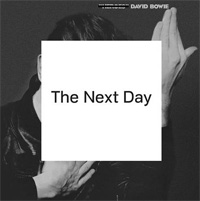
Here are my initial thoughts on the forthcoming David Bowie album, The Next Day. I should preface by saying that I’ve not got the CD yet, the review is from listening to the iTunes pre-release stream, so I won’t comment too much on the production, as the stream seems quite low quality and compressed. But it’s enough to give an initial impression (kind of like listening to an album on low bitrate FM radio back in the distant past).

The Next Day is a strong opening track, with clipped-guitars that are reminiscent of the Lodger era, and lyrically a real call to arms. The opening track is the first of several tracks on this album where Bowie rolls back the years and lets his vocals roar like they used to in the late 70’s.

Dirty Boys heralds the return of the sax! A real oddity, and all the better for it to my ears. He even manages to sneak in a guitar riff reminiscent of China Girl at one point towards the end of the chorus.

The Stars (Are Out Tonight) is quite simply a great Bowie single – driven by a powerful, driving bass-line, and topped off with 70s handclaps aplenty. Sounding like the bastard child of Absolute Beginners (who has shagged Time Will Crawl senseless). What a pretty baby. One of the songs on the album that gets better the more you play it. So go on, play it again.

Love is Lost is one of the more minimal tracks on The Next Day. Sparse drums and cheap sounding synths throb in a track that almost has a demo feel to it. Imagine the empty spaces of Sign O The Times by Prince for an idea of how this song sounds. I love the way that the guitars are often dirty and twisted on the album, and this track is no exception. The backing vocals are also classic Bowie.

“Oh what have you done?”

Where Are We Now? is the track that announced the return of DB. The (previously) most unBowie-like looking back and nostalgia of Where Are We Now? fits really well in the context of this album, which often references Bowie’s musical past . Which is not a criticism by the way, they are his tools, why shouldn’t he use them?

The end of the song is one of the most powerful moments in Bowie’s vast catalogue, and it’s reassuring to hear our rock stars growing old, some gracefully, some disgracefully. Just like us.

“As long as there’s me
As long as there’s you”

Valentines Day is the one track that I was slightly disappointed with on these first, early plays. Musically it harks back just a little too much and is close to becoming a Bowie parody at times, with it’s “sha la la’s”. The excellent lead guitar work towards the end and it’s subject matter (a high school shooting) does give it a bit more weight on repeated plays, and it’s starting to grow on me.

I’d Rather Be High also suffers from being slightly too retro – sounding like a mash-up of The Beatles and The Stone Roses at times. But in context, two potential disappointments out of 14 songs is not bad going.

Boss of Me has a strong chorus and more Bowie sax. If You Can See Me is gloriously chaotic, with an odd time signature, frantic drums and sped up backing vocals.

Every Bowie album has to have a space song, right? And normally they are one of the album’s highlights, so why spoil a perfectly good tradition. Dancing out in Space is the space song from The Next Day, and this clever pop song is driven by a Lust for Life type rhyhmn section, bubbling synths and a nostalgic Bowie backing vocal. This song would make a good third single from the album.

How Does the Grass Grow? is one of my early album favourites. It’s a kitchen sink of a song, with some West Side Story doo-wap thrown in, and sounding like it would easily fit into a remake of Lodger (one of my favourite Bowie albums). Tony Visconti is surely Bowie’s greatest producer – the drums and guitar mix are perfect on this track. The return of Earl Slick and the addition of David Torn on guitar are inspired moves too. Slick provides the link to Bowie’s past and Torn adds the spacey soundscapes.

Starting off with an almost heavy metal riff, (You Will) Set the World on Fire has a chorus that stays with you long after the song has ended. The most straight-forward rocker on the album, it makes a change from the songs either side of it, and is another possible contender for third single.

You Feel So Lonely You Could Die is the album’s second big-ballad. A welcome return of acoustic guitar high in the mix, the drums (especially in the song’s outro) are very Five Years. The mid-70’s Young American referencing arrangement works well on this song and Bowie gets the nostalgia quotient just right here.

If Bowie ever tours, you just know he would segue this with the aforementioned Ziggy Stardust classic. It’s written in the stars.

The Next Day ends on the album’s third big ballad. Mr Bowie, you are spoiling us. Heat has a hint of the Outside album running throughout, and also boasts the albums finest vocal performance.

Loosely strummed acoustic guitars build in intensity alongside a very synthetic, sci-fi backing.

“And I tell myself, I don’t know who I am”

It’s a great album closer.

I’m sure in this X-Factor era of pop music, when quality in the mainstream is often hard to seek out, the press will be all over this album, rating it as a glorious comeback.

To me, it is a very good comeback. But is it one of Bowies greatest albums? No, but I do think it’s the best Bowie album since Outside, and contains at least four songs (The Stars (Are Out Tonight), Where Are We Now?, How Does the Grass Grow? and Heat) that would not sound out of place on a Best of Bowie compilation.

And I’m happy with that. Welcome back David Bowie.

The Next Day – Amazon UK
The Next Day double vinyl


Henry Fool – Men Singing

1 03 2013

"Men Singing" coverMen Singing is the long-awaited follow-up to the band’s 2001 self-titled debut.
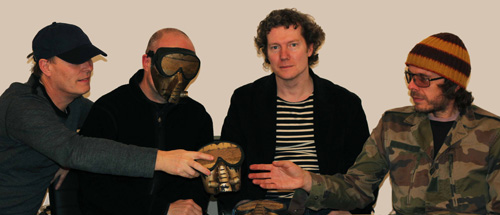
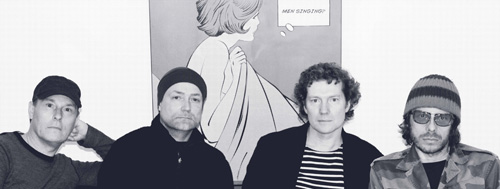
The 2013 line-up of the band includes new collaborators Jarrod Gosling (I Monster/Regal Worm), Phil Manzanera (Roxy Music) and classical violinist Steve Bingham and drummer Andrew Booker (both part of the current live no-man line-up).

The debut Henry Fool album was a mixture of instrumentals and songs, whereas Men Singing is a solely instrumental album, and is a much more coherent listening experience.

Men Singing was recorded over a long period of time – between 2006 and 2012, with Jarrod Gosling and Phil Manzanera adding their contributions towards the end of the recording process. Phil Manzanera adds guitar to Everyone In Sweden and Man Singing. Jarrod Gosling appears on all four tracks, contributing Mellotron, glockenspiel and the excellent album artwork.

Album opener Everyone In Sweden sets the mood, with shifting time signatures, and solos alternating between guitar, jazzy saxophone, and very distorted bass. The music shifts across genres, often two or three times in the same song, which is a great way to keep you listening, especially in the longer pieces. Some instrumental albums can be hard to listen to in one sitting, but Men Singing is certainly not background music, and the performances demand your full attention.

The vintage keyboards often give a real early to mid-70s feel to the pieces. There’s a wonderful section 7 minutes in to Everyone In Sweden, the album’s longest track, where everything breaks down, and keyboard washes give way to a mournful sax and guitar line as the piece ends.

Man Singing, which of course has (no) man singing, is a slower paced affair, and features no-man’s Tim Bowness on very angular chord/arpeggio guitar. There are hints of Adrian Belewesque guitar sounds on the album, which along with the keyboards, sometimes give a feel of Bowie‘s Berlin trilogy as well as more obvious King Crimson influences. The cut to the basics chorused guitar and strings ending works perfectly on this track.

Track 3 is the perfectly titled My Favourite Zombie Dream, which has a real feeling of dread and anticipation about it. Oscillating strings from Stephen Bennett underpin the piece, as it slowly builds to it’s climax, like a soundtrack to a yet-to-be released George A. Romero film.

The final track on Men Singing is the 13 minute plus Chic Hippo. The violin playing of Steve Bingham features heavily, and Stephen Bennett (according to the sleevenotes) is credited with Miles Davis, Mavis Riley and Terry Riley impressions. Mavis Riley? That must have been difficult to pull off – “ooh, I don’t really know”.  Apologies, no-one under 45 (or anyone outside of the UK) will get that cultural reference.

The mid-section of Chic Hippo is one of the most rewarding parts of the album. Fluttering church organ sounds give way to sax riffs from Myke Clifford that would not have sounded out of place on early Bowie or Roxy Music albums, topped off with some wonderful slide guitar from Michael Bearpark. The percussion work from Andrew Booker is another highlight of Chic Hippo.

Men Singing is a strong second album from Henry Fool, and a radical departure for Tim Bowness. Have a listen to the edits on this page, via SoundCloud and YouTube. Another indication of the quality of this album is that it was mastered by award-winning Pink Floyd sound engineer, Andy Jackson.

The album is likely to appeal to fans of mid-period Porcupine Tree as well as those intrigued by Steven Wilson‘s recent foray into more improvisational / jazz-rock influenced material. If you like albums that disturb as much as entertain, then let the men of Henry Fool sing for you.

Henry FoolMen Singing
(KSCOPE244 / 836) – March 11th, 2013 – available in vinyl and CD versions

Order Men Singing from Burning Shed

Buy Men Singing on Amazon UK


Steven Wilson – The Raven That Refused to Sing (and Other Stories)

22 02 2013

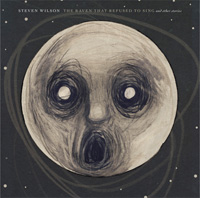
The Raven That Refused to Sing (and Other Stories) is the third Steven Wilson solo album, but where it differs from the previous two releases is that it was written to be performed with the musicians who make up his touring band. This gives a real cohesion to the album, which was produced by Wilson but features Alan Parsons as associate producer and recording engineer.

Steven Wilson’s albums, whether solo or with his main bands Porcupine Tree or no-man, have always been expertly produced. The Raven That Refused to Sing (and Other Stories) takes it up a notch, with the best sounding Wilson release to date.

A case in point is album opener Luminol.  Devoid of vocals until nearly 5 minutes in, switching time signatures, bass-driven instrumentation and layered mellotron / piano all feature. The production allows the instruments the space to breathe, and there is no brick-wall mastering in evidence.

At times reminiscent of Yes, Luminol sets the scene for the rest of the album, which is a mixture of progressive and classic rock.

Drive Home is one of Wilson’s best songs to date. Like a modern-day Stars Die, layered harmonies, strings and acoustic guitar underpin a tale of loss and regret.

“Well love can make amends
While the darkness never ends
You’re still alone
So drive home”

Drive Home is the one track on the album that really harks back to that mid-70s LA classic rock feel, and ends with a breathtaking guitar solo from the newest member of the Wilson live band, Guthrie Govan.

The Holy Drinker is one of the darkest songs on The Raven That Refused to Sing (and Other Stories).  Featuring some wonderful interplay between Theo Travis and Adam Holzman, the first few minutes of the song wouldn’t sound out of place on Wilson’s previous album, Grace for Drowning.  But it then mutates into a mid-70’s classic rock Deep Purple / Pete  Townshend / Yes hybrid. Speeding up and slowing down, crossing genres at will, it’s clear that playing together over recent tours has really helped this group of musicians gel and become much more than a backing band.

Photo by Naki Kouyioumtzi

The subject matter for the album’s lyrics also help make the album a complete piece, like in those distant days when album’s were made to be heard in one sitting, not split into easily digestible iPod-friendly chunks. Drawing on inspiration from 19th Century ghost and supernatural writers such as Edgar Allan Poe, the lyrics touch on subjects such as the spirit of a busker who continues to play (badly) long after his body departs this earth (Luminol) and a man who is haunted by the ghost of his wife whose body he buried under the floorboards (The Watchmaker).

The Pin Drop has a real Martin Grech feel about the arrangement, and contains the wonderful line, that sums up the theme of the album:

“I have not lived and loved enough”

It’s the shortest track on the album, and one of the most immediate and powerful. Lyrically almost a companion piece to Porcupine Tree’s Heartattack in a Lay By, both sets of lyrics touch on regret and sadness as someone’s life reaches it’s premature end.

The Pin Drop is one of the tracks that I keep coming back to and one which would make a fine single – although do singles exist anymore?

The Watchmaker will probably appeal most to fans who lean towards progressive rock.  A slowly building pastoral sounding arrangement for the first quarter of the song, before the organs and percussion up the pace.  The mighty Nick Beggs really shines on this track.

Photo by Naki Kouyioumtzis

The Raven That Refused to Sing is the album closer, and what a beautiful way to end the journey.  Starting off like a track from Storm Corrosion, before developing into the song that will surely be a staple of Wilson’s live shows for many years to come.

I hear hints of Radiohead and Sigur Ros in the arrangement, but also a flavour of Wilson’s first solo release Insurgentes. It’s an incredibly moving song that hits you really hard the more you hear it.

“Sing to me raven
I miss her so much
Sing to me Lily
I miss you so much”

If you don’t shed a tear as the song reaches it’s climax, you have no heart, no soul, and you should leave my blog now!

The deluxe version of this album includes a CD of demo versions of all the songs – obviously Steven Wilson demos are the quality of most people’s finished albums, but they offer a fascinating insight into the albums development and show what an impact the musicians and Alan Parsons made to the finished release.

Album of the year already? It depends on what else comes out over the next 10 months, but I think it’s safe to say that The Raven That Refused to Sing (and Other Stories) will be on my list come December 2013. A Wilson career best?  Yes, it’s up there with no-man‘s Together We’re Stranger for me, and is already shaping up to be my favourite Wilson solo release.

The only negative for me (which I touched upon in my Grace for Drowning review) is that the freedom Wilson seems to be really enjoying in his solo work means I really don’t see Porcupine Tree reconvening anytime soon.  I hope I’m wrong, as Porcupine Tree are one of my favourite bands, but with albums of this quality, the blow is somewhat lessened.

Watch the video for The Raven That Refused To Sing:

The Raven That Refused To Sing (And Other Stories) is released by Kscope on 25 Feb 2013.

You can buy The Raven That Refused to Sing (and Other Stories) in various formats, including vinyl, from the official Steven Wilson store on Burning Shed.

Buy The Raven That Refused to Sing (and Other Stories) CD on Amazon UK

Buy The Raven That Refused to Sing (and Other Stories) Bluray on Amazon UK

The Raven That Refused To Sing double vinyl


Fleetwood Mac – Rumours [35th Anniversary 3CD Deluxe Edition]

2 02 2013

Fleetwood Mac - RumoursAn album I’ve previously bought on vinyl, cassette and CD, and now a 3 CD deluxe edition. So it’s clearly an album I like, along with over 40 million purchasers of this album!

Disc one of the 3CD Deluxe Edition is the remastered version of the original album, including extra B-side track Silver Springs. This remaster is the 2004 one, which did not need improving.

Dreams is one of my favourite songs, I never tire of hearing this track. Unless it’s the version by The Corrs, who just lobbed a shed-load of flutes and an Everything But The Girl Missing beat over the top. Avoid.

Sorry about that – back to Fleetwood Mac. If you don’t own Rumours, and are a casual fan, the single disc version will be enough for you. If you are a die-hard fan, for a few pounds more, the 3-disc edition is the definitive version.

Rumours, originally released in February 1977, was a staple of FM radio in the late 70s, and you will be surprised at how many of these songs you know if you grew up in that golden era.

You Make Loving Fun is sprinkled with lovely harmonies, and driven by chunky rhythm guitar and crystal clear solos by Lindsey Buckingham.

Fans of Formula One racing on the BBC in the late 70s / 80s will recognise the iconic bass line towards the end of The Chain, one of the album’s strongest songs.

The remaster brings elements to the fore that I had missed on earlier incarnations, such as the highly percussive multi-layered guitar, and intricate harmonies (? underpinned by accordion) on Never Going Back Again.

This edition of the album ends with Silver Springs, which was originally the b-side to Go Your Own Way.

Disc 2 is a live collection, recorded during the 1977 Rumours tour in Oklahoma, Tulsa, Nashville and Columbia. Several non-Rumours tracks feature, the highlight being Rhiannon clocking in at nearly 8 minutes.

Another longer-than-the-album take is Gold Dust Woman, with its wonderful Rhodes v chorused guitar intro. The live Go Your Own Way has a great new-wave guitar intro, and the live disc ends with Christine Mcvie’s Songbird.

Fleetwood Mac "Rumours" 3-CD Deluxe Edition

Disc three is made of up alternative versions, demos and out-takes from the sessions. These tracks often contain tape hiss, sparse instrumentation, in-song chatter and are no way near the fidelity of the studio album. However, what they lack in audio quality they certainly make up for by offering a peek into the creative process.

My favourite is Dreams (take 2) – built around electric piano and rough guitar, the backing music sounds nothing like the album version, but the vocal melody is intact, and it’s a moving performance by Stevie Nicks.

Never Going Back Again [Acoustic Duet] is more fully formed than some of the tracks on disc three. Keep Me There [With Vocal] is interesting, as it includes the famous outro (a shortened version) that was later added to The Chain.

Fleetwood Mac

Silver Springs [Early Take] contains another fine Nicks vocal, and an echo laden backing track that differs enough from the finished version to make it an intriguing listen.

Planets Of The Universe [Demo] is a piano and vocals version of the track that later appeared on the Stevie Nicks Trouble in Shangri-La album. The lyrics are very raw and direct, and I prefer this version to the Trouble in Shangri-La studio version that was released in 2001.

I’m glad I bought this new version of Rumours – and I’m now embarking on a Big Mac of the Fleetwood variety binge. I’ve ordered the expanded Tusk re-issue and 25 Years – The Chain 4-CD compilation.

Buy Rumours [35th Anniversary Edition] – 3CD Deluxe Edition from Amazon

Buy Rumours [35th Anniversary Edition] – single disc edition from Amazon

Watch a live version of Dreams from 1977: