Plenty – It Could Be Home

14 04 2018

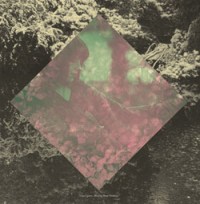
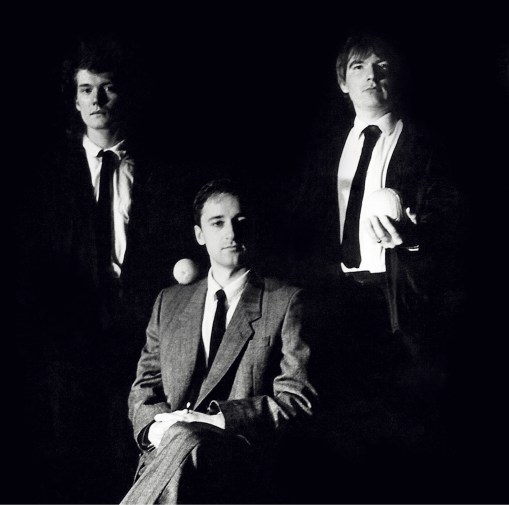
It Could Be HomePlenty was Tim Bowness’s immediate pre-no-man band. In 2016 and 2017, Bowness and fellow founder members Brian Hulse and David K Jones re-recorded Plenty’s catalogue of 1980s songs, revising some of them and even adding a newly written song (The Good Man). The end result is the debut album, It Could Be Home released on 27 April 2018 on Karisma Records.

Plenty are joined on the album by no-man live band members Michael Bearpark and Steve Bingham, Tim’s Bowness / Chilvers collaborator Peter Chilvers and Jacob Holm-Lupo (White Willow / Opium Cartel).

Whilst the album is understandably shot through with a real 80s sensibility, with touches of The Blue Nile, David Sylvian, Peter Gabriel, Thomas Dolby, and David Bowie lingering in the sounds and arrangements, It Could Be Home deserves to be listened to as more than just a work of pure nostalgia.

The album opens with a synth heavy, lightly delivered Jagger / Richards As Tears Go By, that is more Stranger Things than Lost in the Ghost Light. Hide delivers an Associates vibe to the music, and signals an album that is much more upbeat than recent Bowness releases. I think that the recent Bowness solo album’s have delivered some of his finest work, with material that is often comparable to a lot of his work in no-man, but it is good to hear a different side with Plenty. Vive la différence.

By far my favourite track on the album, the melancholic Never Needing is the one track on It Could Be Home that would fit onto one of Tim’s recent albums. Fans of no-man’s early work will recognise the song – previously recorded by no-man as Life is Elsewhere, and nowadays mostly existing on dusty old bootlegs or sitting as an (original “dodgy”) Napster-era, hiss-filled mp3 file on people’s hard-drives.

The Plenty version is a revelation. Sparse, brooding and slow-building, with an aching synth line and some of Tim’s most personal and direct lyrics and vocals. This is one of those occasions where I can confidently say that it is worth buying the album just for this song.

“You live in your world and I die in mine.
But I’m hopeful life is elsewhere”

Broken Nights really lifts towards the middle section of the song, before a key 80s stalwart (synth marimba bells) usher in the rest of the song.

Foolish Waking is another of my favourites from the album. Beatless and with some wonderful guitar lines from Michael Bearpark, and feeling a little like the work of the only Tim Bowness/Samuel Smiles studio album, World of Bright Futures from way back in 1999.
plenty

Strange Gods is underpinned by a delicious Mick Karn like bass-line, has hints of Bowie in the verses and a chorus seemingly inspired by The Blue Nile. So how can you not like the song? The mix, carried out with obvious love and attention by Norwegian guitarist, composer and producer Jacob Holm-Lupo (White Willow / The Opium Cartel) is colourful and warm throughout the album, but especially on Strange Gods.

Every Stranger’s Voice features Peter Chilvers on piano and the forensically detailed lyrics are filled with memories of an intense but long dead relationship. A powerful Michael Bearpark solo lifts the song towards its conclusion.

Another up-tempo track is Climb, which has a real post-punk meets The Associates taking a quick detour via The Comsat Angels (circa the Fiction album). What a marvellous melting pot.

The Good Man is a new song that emerged during the recording sessions, and lyrically is tied to the album’s key track, Never Needing. The music has a late 80s feel, and lyrics that signal regret at letting go and giving up the fight too soon. The Good Man and the album’s closing title track offers something very different from recent Bowness releases.

The fact that the recording sessions produced new material of this quality, along with out-takes (such as a wonderful version of Forest Almost Burning, that I hope is revisited) suggest that there is a future for Plenty beyond this album.

If you pre-order It Could Be Home by Plenty from Burning Shed, on CD, vinyl or exclusive limited edition blue vinyl, you will receive an exclusive postcard and a free download EP of four of the band’s 1980s demos. Please note – this exclusive offer is only available until 27-04-2018 and only From Burning Shed.

Order Plenty – It Could Be Home on CD from Amazon

Order Plenty – It Could Be Home on vinyl from Amazon

As Tears go by
Hide
Never Needing
Broken Nights
Foolish Waking
Strange Gods
Every Stranger’s Voice
Climb
The Good Man
It could be Home

Band website: www.weareplenty.com


Near Future – Ideal Home

8 04 2018

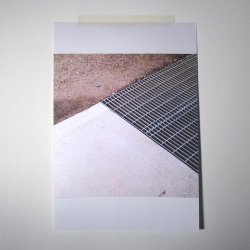
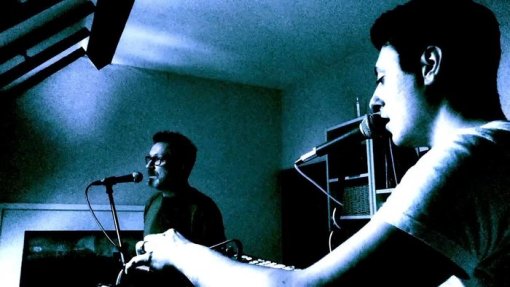
near_future_-_ideal_homeIdeal Home is the debut album from Near Future, a collaboration between Blancmange’s Neil Arthur and electronic artist Bernholz (who also performs live as part of Gazelle Twin).
The opening track, with its alarm-like electronics and 80s drum-machine toms, is a real statement of intent. I love the twin vocals on this track, they really remind me of the more experimental side of Godley & Creme (such as the Freeze Frame album from 1979).

Field This is a sparse, edgy piece of electronica, with off-kilter live and processed vocals.

“I remember when this was a car-park, I remember when this was a field”

Overwhelmed is one of the album’s highlights. At times reminding me of the title track to John Foxx’s The Garden, the glacial beauty of the strings work well with the heavily processed vocals and the kitchen sink drama of the lyrics.

Thought Terminating In Your Night builds from scratchy, discordant noise to a more fully formed piece, but the unnerving digital undertones remain to the songs end.

Come And Play is a warmer electronic track that builds from the sounds of children playing. I love the reverb-heavy, almost early Clannad like vocal lines that decorate the second part of this trance-like (mostly instrumental) song.  Along with the title track, this is my other favourite from the album.

near_future

Dawn is the album’s longest track, and another song that utilises found sounds before mutating into something far removed from the beautiful birdsong that ushers in the dawn. Heavily processed, at times robotic spoken words sit atop a mixture of harsh pulses and softer synth lines. The mixture of the two extremes is unsettling and suits the track perfectly.

Gap In The Curtain is another juxtaposition – the edgy, paranoid vocals jostling for dominance over the optimistic, rich synth backing makes this a unique track on the album.

The song that is nearest to the work of Neil Arthur’s main band Blancmange is Kites Over Waitrose. The arrangement reminds me a little of the dark mood of This Mortal Coil, the 80s 4AD collective. Abrasive saw synths and audio seepage underpin the spoken vocals on Kites Over Waitrose.

Album closer Bulk Erase could easily have been recorded in 1983 / 84, with its metronomic kick drum and slowly building keyboard lines.

“Too much has happened, that I need to forget
To be moving forward, without all this regret”

There are further strong hints of John Foxx in Bulk Erase as well as a more recent electronic artist, Deptford Goth.

This is an interesting debut release from Near Future, and adds to a very productive period for Neil Arthur – with recent releases from Blancmange as well as another alternative electronic project Fader.

If you have not heard the work of Bernholz, the other half of Near Future,  some of his releases are available on Spotify, including the album How Things Are Made which has some great songs including the wonderful title track.

Near Future – Ideal Home

1. Ideal Home
2. Field This
3. Overwhelmed
4. Fish And Chips
5. Thought Terminating In Your Night
6. Come And Play
7. Dawn
8. Gap In The Curtain
9. Kites Over Waitrose
10. Bulk Erase

Order Near Future – Ideal Home on Amazon


Blancmange – Unfurnished Rooms

16 09 2017

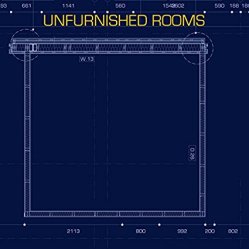
unfurnished roomsUnfurnished Rooms is the 9th studio album from Blancmange.

The 2017 version of Blancmange is a world away from the colourful electronic pop of Living On The Ceiling and Blind Vision. Recent releases find the band (now down to Neil Arthur with co-producer and musical partner in Fader, Benge plus occasional appearances from guitarist David Rhodes) producing much darker and more minimalist electronica.

The title track of Unfurnished Rooms hisses and crackles, with a feel of the first two John Foxx albums. Deep synths and frantic guitar lines accompany this song with lyrics hinting at confusion and things being not what they seem, in a dream-like state.

We Are The Chemicals is an early album highlight. I love the glam-rock guitar and any track that centres around “a chemical spillage on a trading estate in Altrincham” is likely to pique my curiosity.

The 70s T-Rex type guitar is ramped up a notch for What’s The Time? – a conversation piece set to music.

“Whats your favourite crime?”

The album’s most moving song arrives at the halfway point of the album. The lyrics for Wiping The Chair focus on the minutiae of a former friendship or relationship, set to a potent mix of 80s sounding electronica and a gothy, The Cure referencing intro.

“But your voice still sounds the same…”

Anna Dine also feels like it is inspired a little by the sound of the early albums of The Cure – with the sort of deep bass that underpinned A Forest. I love the mood conjured up by Unfurnished Rooms, the album has a real feeling of space aided by the good use of glacial reverb and delay.

In December has ringing guitar lines sitting alongside warm, early 80s strings. Old Friends adds some twisted pop to the mix, delivered without warning in the form of a stunning chorus that serves as a prelude to the Nine Inch Nails channelling Gratitude. David Rhodes (Kate Bush / Peter Gabriel) adds some quality guitar work to Gratitude, reminding me a little of the power of the late John McGeoch (Magazine / Siouxsie and the Banshees).

The album ends with the track that will probably become most fans favourite, Don’t Get Me Wrong. By far the albums longest track (at just over 8 minutes), and no, its not a cover of The Pretenders track! Don’t Get Me Wrong features long-time Blancmange admirer John Grant giving it his best Mike Garson on piano as well as adding wonderful mood-altering backing vocals. The album closer abandons the sparse , early 80s feel of the rest of the album, and hints at a possible new direction for Neil Arthur & Blancmange.

I’m so glad that Blancmange are still developing and heading in new directions, instead of looking back to their past. Give Unfurnished Rooms a listen if you are a fan of electronic music, I think you will find much to enjoy.

Buy Blancmange Unfurnished Rooms on CD

Buy Unfurnished Rooms on vinyl

Buy The Blanc Tapes


Blancmange – Happy Families / Mange Tout / Believe You Me

9 07 2017

Edsel Records are re-releasing the first three Blancmange albums on 4 August 2017, as the limited edition Blanc Tapes boxset and as three individual deluxe editions . The 2017 editions include a remastered version of the original album, plus b-sides, extended versions, remixes, demos, BBC Radio One sessions and three BBC In Concert performances.

Blancmange-Happy-FamiliesHappy Families (1982) was the first Blancmange album. The remastering on all three re-issues is really well done. No brick-wall remastering here – the music has never sounded as good as it does with these Edel re-issues.

From the Talking Heads like funk of album opener I Can’t Explain, through to singles Feel Me, God’s Kitchen and probably Blancmange’s most well-known track Living On The Ceiling, Happy Families is a wonderful early 80s album.

Disc 1 of Happy Families includes the 7″ and original version of Waves, as well as the extended version of Living On The Ceiling, the 12″ mix of God’s Kitchen and the 12″ instrumental of Feel Me.

Disc 2 is a mixture of demos and my favourite extended version from this period, the Feel Me [extended 12″ version], that features some great guitar work from guitarist David Rhodes (Kate Bush / Peter Gabriel). The demos show a glimpse of a much less polished Blancmange – closer to the starker more experimental work of Cabaret Voltaire and early Human League.

Disc 3 is made up of Radio 1 session tracks from February 1982 (John Peel) and June 1982 (David Jensen) and a concert recorded at the BBC’s Paris Theatre in November of 1982. The highlights of this disc are two rare Blancmange songs – the OMD-like I Would and the dark electronica of Running Thin.

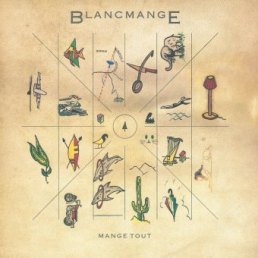
Blancmange-Mange-ToutMange Tout (1984) was another commercial success – and contains the singles Don’t Tell Me, Blind Vision (my favourite Blancmange single), and a fine cover of Abba’s The Day Before You Came.

Other stand-out tracks on Mange Tout include Game Above My Head (CD1 includes a wonderful 7 minute version), the frenetic All Things Are Nice and the dark, glitchy Martin Ware (Heaven 17) demo of Blind Vision.

If you look beyond the pure-pop of the singles, there is a real feel of mid-80s experimental dance, along with a David Byrne influence that I did not pick up on at the time.

CD2 highlights the experimental side of Blancmange, with a mixture of demos and extended versions, the highlight being a very different version of All Things Are Nice. CD3 has a 4 song Kid Jensen session and 12 tracks from a Radio 1 In Concert recorded at Hammersmith Palais.

Blancmange-Believe-You-MeThe final 80s Blancmange CD was Believe You Me (1985). The least successful of the original albums, it doesn’t quite have the freshness of the first two albums, but is still a fine album containing some strong songs, including opener Lose Your Love and one of the bands best songs, Why Don’t They Leave Things Alone? 

Listening to this album now, especially songs such as M Diver (Alternate Dream) [demo] from the second disc, I think its clear that had the band continued, they could have found a second wind in the late 80s / early 90s amongst the likes of the psychedelic pop / dance of The Beloved and S’Express.

CD2 contains a mixture of interesting demos and extended / single edits, the highlights of which are the wonderful re-invention of Why Don’t They Leave Things Alone? as I Can See It [7″ single version] and the lovely, respectful cover of Glen Campbell’s Gentle On My MindRiver Of Life [demo] is a bluesy synth workout that points to Neil Arthurs most recent project, the boldly electronic First Light album by Fader.

CD3 is made up of a late 1985 Janice Long session and a BBC In Concert recorded at the Hammersmith Odeon in late 1986. The highlight of this show is a superb version of Blind Vision (the final song in the set, but introduced as the first song in the set!). Not sure if that was a Spinal Tap moment or something to do with the CD sequencing, but its an enjoyable live show. Hello Cleveland!

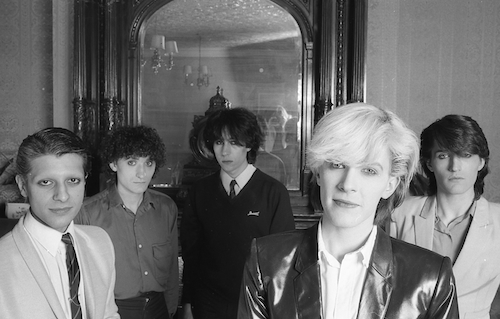
blancmange-2017

The three 2017 remastered deluxe editions will appeal to Blancmange fans, and anyone who loved the electronic music of the 80s. The albums have been lovingly remastered and contain fascinating glimpses into the development of the bands songs.

Blancmange return with a new album Unfurnished Rooms in the Autumn of 2017, sadly without Stephen Luscombe but featuring guitarist David Rhodes.

Buy The Blanc Tapes Box set, Deluxe Edition on CD

Buy Happy Families (Deluxe Edition) on CD

Buy Mange Tout Deluxe Edition on CD

Buy Believe You Me Deluxe Edition on CD


Fader – First Light

22 06 2017

FaderFader are Neil Arthur (Blancmange) and Benge (John Foxx & The Maths / Gazelle Twin). They have released their debut album, First Light, on Blanc Check Records.
First Light is a dark, simmering electronic album. The music sits somewhere between Cabaret Voltaire and early (pre-The Garden) John Foxx. And that’s a good place to be.

3D Carpets is driven by analogue synths and minimalist percussion, with a chorus that soaks into your brain. I don’t have a clue what Neil Arthur’s lyrics are about on a lot of the songs – but I love the images they conjure up,  they paint a picture that is open to personal interpretation. Its good to use your 21st century imagination.

Check The Power has a tense, paranoid vocal delivery from Arthur, and some fine, deep bass synth lines from Benge.

“You better go back”

I love the way the synths sound so dirty,  not like VST / emulations, the duo clearly use authentic machines.

There is a real depth to these meaty sounds. Way Out is a case in point – the sweeping synths shift from deep low to brighter high notes. At times I struggle to believe that this album was recorded in 2017, not 1979.

“Caught in the moment of doubt”

The title track continues the edgy feel, with Arthur shouting about “Catholic converters” and “Resume the search at break of day”. The track First Light reminds me a lot of John Foxx, have a listen below.

The marching percussion and thick synths on Wonderland conjure up memories of early OMD and very early Human League / Heaven 17. Over the first few album listening sessions, I grew to appreciate the stream of consciousness, quite dystopian lyrics. There is also a lot of humour on display here.

Liverpool Brick is a wonderful, beatless song. The sparse but melodic instrumentation works really well with the lo-fi recording of the vocals. Liverpool Brick also contains my favourite lyrics on the album. Like the track, the lyrics are very direct (in stark contrast to the rest of the album).

A Trip To The Coast delivers one of the most memorable songs on the album. A real mood of melancholy and lost, fading memories permeate throughout my favourite track, which will surely appeal to the Stranger Things generation. I hope A Trip To The Coast is used to promote First Light, as I think it will be a favourite with a lot of people. Put this song on your SoundCloud, Fader!

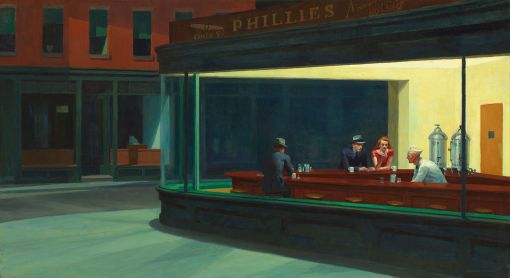
The album closes with another album highlight, Launderette. Apparently a “very British take on the solitary mood of Edward Hopper’s Nighthawks” (a print of which sits on my home studio wall, fact-fiends). Such a moving piece, with a metronomic delayed vocal delivered over a dark, simple synth-scape, and a throbbing low hum.

“In silence and silver, Ikea blue bag.
Washing away the stain, on our rags”

Nighthawks_by_Edward_Hopper

First Light is a fine debut release from Fader, and a must-buy for fans of late 70s, early 80s electronic music. I hope its the first of many releases from the electronic duo, as there are clearly lots of places left for Arthur and Benge to explore.

Follow Mr Kinski’s Music Shack on Twitter

Buy First Light by Fader (CD) on Amazon

Buy the album on Vinyl

or buy the album on mp3

Visit Fader on Facebook or follow the duo on Twitter


Department M – Deep Control

9 04 2016

Deep ControlDeep Control is the first full-length album release from Department M.

Department M is Owen Brinley (former Grammatics singer / guitarist) and drummer Tommy Davidson. They are joined on the album by vocalist Snow Fox, James Kenosha and Lins Wilson.

I was a fan of Grammatics debut album – especially the songs Relentless Fours and Inkjet Lakes, so have been looking forward to the first Department M album, and it does not disappoint.

Department M dial up the electronics on Deep Control, and inhabit the space vacated by Songs of Faith and Devotion era Depeche Mode. Guitars are not the driving force in Department M, they are more atmospheric and layered and work well with the powerful drums, deep bass synths and intricate keyboard lines.

Bad Formulae is an early example of how Brinley’s voice and songwriting has progressed over the past few years. The pace and mood shifts from soft to menacing in the blink of an eye.

Bleak Technique is propelled by some great interplay between the bass and drums, as well as joint vocals from Brinley and Snow Fox. I love the goth-like guitar lines that precede the chorus.

Watch a (very different from the album cut) but moving nonetheless live solo performance of Bleak Technique below…

Kill My Superstition takes a few listens to get under your skin, but this song of addiction, with it’s nagging flute / synth line pays dividends after repeated plays.

“Kid sister morphine, you blaze a trail, from neon carriages sirens exhale”

Stress Class is the nearest to the sound of Brinley’s former band. But the album really shifts up a gear with Air Exchange,  which is easily one of my favourite tracks on the album. I love the changes in pace and the duel vocals. A lot of electronic bands rely too much on processed percussion – Department M having a non-VST driven drummer adds a real sense of power and urgency to these performances.

“Help me forget myself, how hard could it be?”

Department M

Deep Control, Pt. 2 is a gorgeous late-night torch-song, that reminds me a little of Flat Earth era Thomas Dolby. The album was recorded at The Lodge, Bridlington, as was the final Lone Wolf album from last year. The sound of the studio, which ran deep through the Lone Wolf album, can  really be felt on this track.

Linear features a strong electric bass-line, and as the synths break-down, the second section of the song is the most powerful piece of music on the album. Linear ends on an almost post-punk note, it’s a wonderful track.

“trace the vapour trails above, so linear.”

Compulsion is the album’s closing piece. A perfect storm of hard sequencers, off-kilter jazzy sax lines and a nagging guitar riff push the track, and the album, to it’s conclusion.

Deep Control was made to be played loud, so download the album, and do just that

Buy Department M – Deep Control on Amazon


Japan – A Foreign Place – The Biography (1974-1984)

10 10 2015

Japan – A Foreign Place – The Biography (1974-1984) is a new in-depth look at one of the most influential (and often neglected) bands of the late 70s / early 80s.Japan - A Foreign Place

Published exclusively by Burning Shed in deluxe hardback edition, the book features contributions from former band members Steve Jansen, Richard Barbieri and Rob Dean, with archive material from David Sylvian (who did not contribute directly to the book) and the late Mick Karn.

Anthony Reynolds 212 page book starts with the early years of the band, and provides a fascinating insight into the musicians formative years in South-East London (Catford and Lewisham).

Along with the obvious 70s musical and cultural starting points, such as Bowie, Bolan, Lou Reed and Roxy Music, other surprising influences such as Motown and New York’s Television crop up as feeding into the mix of what was to become Japan.

The influence of Simon Napier-Bell and the lack of money making its way to the band, even during their most successful Tin Drum period, is well-documented in the book. In these days of a reduced and weakened music industry, you often hear about the golden era of the 70s and 80s when artists sold millions of albums, so its easy to forget that not everyone reaped the financial rewards during this bygone era.

The most interesting part of the book for me was the pre-fame years – especially stories about the early gigs, where Japan shared the stage with acts as diverse as Blue Öyster Cult and The Damned. The often negative audience reaction seemed to give the band the strength to ride the criticism that was to come their way over the next few years.

As well as talking to the band members, Anthony Reynolds also gives a voice to key-collaborators such as guitarist David Rhodes, along with school teachers and friends of the band. This helps to frame the time-scale of the story, as the band moved from being a guitar-heavy, new wave inspired band to the more electronic, layered experimental outfit that eventually found chart success and critical acclaim.

The Tin Drum album and the farewell tour are covered in depth in the book. Listening today to the bands most famous song Ghosts reinforces that its as moving now as it was when originally released all those years ago – late 1981 to be precise. The songs stark arrangement has certainly helped the song age gracefully.

The role of producers – particularly John Punter and Steve Nye (who worked with David Sylvian on several of his post-Japan solo albums) is explored and the sections on the recording of the later albums makes for fascinating reading.

Some awkward moments are also touched on in the book – including the falling out between Karn and Sylvian that led to the band’s disintegration, and the Gary Numan misunderstanding on a Japanese tour.

Reading Japan – A Foreign Place made me listen again to the bands catalogue with renewed enthusiasm. I rediscovered songs that had passed me by at the time, such as Fall In Love With Me and Alien. I also fell back in love with the Tin Drum album, especially the percussion work of Steve Jansen (Visions of China has such a unique drum pattern).

Japan – A Foreign Place is well-paced, and clearly written by a fellow musician who is a lifelong fan. The words and (many) pictures give a flavour of the various stages in the bands short but colourful career. It is also pretty fair in the amount of time devoted to individual members – its not the David Sylvian story, and its good to hear more about the contribution and personalities of Richard Barbieri, Steve Jansen and Rob Dean.

My only criticism is that the period covered by the book ends in 1984. I would have liked to have read about Rain Tree Crow, the post-Japan collaboration from 1991 that remains one of my favourite 90s albums, and is a period that is not really well-documented. Also, because of the timescale, there was no opportunity to discuss the time Jansen, Barbieri and Karn spent working with no-man in 1992. Maybe Anthony Reynolds will consider writing a post-Japan book?

Ok, I’m off to listen to Quiet Life and Tin Drum, followed by Gary Numan’s Mick Karn infused Dance. Why don’t you join me?

Buy Japan – A Foreign Place – The Biography (1974-1984) from Burning Shed

Buy Gentlemen Take Polaroids on Amazon

Buy Tin Drum on Amazon

Buy Exorcising Ghosts on Amazon

Buy Quiet Life on Amazon

Buy Gary Numan – Dance on Amazon


Laura Groves – Committed Language (EP)

18 02 2015

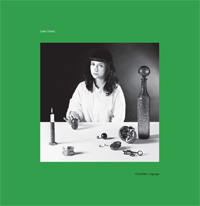
committedThis is Laura Groves second EP, the follow-up to 2013’s dreamlike Thinking About Thinking (EP).

You might be aware of Laura’s previous work as Blue Roses, and the often raw, inspired by the northern landscape acoustic songs from their 2009 debut (and only) album. The music released under Laura’s own name is much more layered and electronic, though still finding the space to add guitar and live bass to good effect on some songs.

EP opener Committed Language could have jumped straight out of your dusty old cassette copy of Now That’s What I Call Music 1984 – with it’s warm analogue Japan‘esque synths, and off-kilter percussion. I hear some of the playful song-arrangements of Todd Rundgren, and the electronic experimentation of Chimera era Bill Nelson in some of Grove’s recent material, and Committed Language is no exception to this.

Dream Story has grown from the demo version that I heard online around 3 years ago, and is now driven by production (especially the bass and drum machine) that recalls Fleetwood Mac‘s Tango In The Night. Dream Story takes a few wonderful diversions along the way, and the lead-in to the chorus is as smooth as the world’s smoothest thing. And that’s smooth.

Have a listen to a stream of the song from Laura’s SoundCloud page below.

Friday is a piano and rhodes ballad, that slowly builds as sugar-sweet backing vocals flit around the lead vocal. The most direct arrangement on this 4 song EP, and a moving song.

lgroves

The EP closes with Mystique, a slow-burning jazzy track. Hazy chorused guitar washes through a song Steely Dan would be proud of (if they didn’t spend 45 years perfecting the reverb on the snare). Mystique repays your faith after repeated listens, as new highlights make themselves known to you as this haunting song really gets under your skin.

I recently bought a wonderful yacht pop / yacht rock compilation called Too Slow For Disco, and the tracks on this EP would not have sounded out-of-place in that era, the magical period between 1975 and the mid 1980s. The 80s are often described as being a light, superficial musical decade, but a lot of colourful, adventurous music was released during that time – it wasn’t all Wham! and Haircut 100.

The jazz inflections, bold arrangements and synth / rhodes layers give the music on this EP a warm, nostalgic identity that fits the sad songs on Committed Language. Now, where is that album Laura?

“I think I’m ready now, bring back the mystery…”

Buy Laura Groves – Committed Language (EP) on bandcamp

Buy the Blue Roses CD on Amazon


The Opium Cartel – Ardor

6 11 2013

"Ardor" by The Opium CartelArdor is the second album from The Opium Cartel, an outlet for the more pop orientated music of songwriter/producer Jacob Holm-Lupo from Norway’s art-rock band White Willow.

Ardor is inspired by the 80s pop of The Blue Nile, Thomas Dolby, Japan, Peter Gabriel and Kate Bush, as well as drawing on more modern electronic music by the likes of M83 and Air.

Fans of 80s music will also recognise the warm synth sounds of the Prophet 5, Fairlight, Oberheim OB8, and the PPG Wave, that are scattered throughout the album’s 9 tracks.

Album opener Kissing Moon features Venke Knutson and Rhys Marsh on vocals, and features some wonderful, frenetic percussion and the first appearance of those lovely warm synths!

When We Dream (stream the remixed single version below) has shades of Icehouse and a-ha in the vocal performance from Norwegian singer Alexander Stenerud. The most commercial track on the album, with a very anthemic chorus, and an addictive guitar riff. When We Dream bleed’s pure unadulterated nostalgia.

Silence Instead is an early album highlight, co-written by and featuring  vocals from no-man’s Tim Bowness. A slow-burning song, with some delicious guitar work, and a synth sound that reminds me of my favourite Thomas Dolby track, Screen Kiss. Tim is a regular collaborator of  Jacob’s, featuring on the debut album by The Opium Cartel as well as White Willow’s progressive masterpiece, Terminal Twilight.

“The snowdrifts are real but the mountains are fake”

If you miss a-ha (who split in 2011), you will love Northern Rains, which sounds like a long-lost 1980s ballad from Morten Harket & co, underpinned by the Peter Gabriel rhythm section from 1980.

Sorry about all the 80s references in this review, but it’s fun playing spot the influence, and it helps that the 80s homage in the music is not ironic or cheesey, but playful and pays respect to the creativity and exploration of a much maligned decade.

Watch the Ardor album trailer

Revenant features the only vocals on the album from Jacob Holm-Lupo, and is one of the albums more progressive tracks. I don’t know if it is inspired by the recent French TV series “The Returned / Les Revenants” but there are certainly some nods to the excellent Mogwai soundtrack in the instrumentation.

White Wolf was the first song written for the album, and heralds a change in the album’s direction from this point in, with each track getting steadily more progressive. The middle section is very moving, and veers off into Yes-inspired territory towards the end, with a Chris Squire-like strong, melodic bassline.

The Waiting Ground has the classic synths still present, and features a great performance from Henry Fool (and current no-man live band) keyboard player Stephen Bennett.

“If I run, where do I run to?”

Then Came the Last Days of May is Ardor‘s only non-original track, a haunting cover of a classic rock ballad from Blue Öyster Cult’s debut album from 1972. This is one for fans of Opeth’s Damnation album, and a perfect way to set-up the album finale.

Mariner, Come In is the epic that completes the album. A rare vocal outing for Henry Fool’s Stephen Bennett, this track is more in keeping with recent White Willow, and the latter section of the track is most definitely jazz-rock and proud of it! A wild saxophone solo from Harald Lassen on top of layered synths is reminiscent of parts of the recent Steven Wilson album, and after 11 minutes, the track and the album itself, slowly fades to a close.

Ardor is a very different beast to the first Opium Cartel album, and feels more consistent (even though it has a wider variety of vocalists). It should appeal to a wide audience – from the more mainstream fans of modern electronic / pop to lovers of modern progressive music. Oh, and fans of 80s music!

Buy Ardor on Amazon UK 

Buy Night Blooms  on Amazon UK

Buy White Willow’s Terminal Twilight on Amazon UK


Laura Groves – Thinking About Thinking EP

29 09 2013

"Thinking About Thinking" EPLaura Groves (who previously recorded under the moniker Blue Roses) has released her first new solo material since 2009, with the digital (and vinyl) release of the Thinking about Thinking EP on Deek Recordings.

The opening track, Inky Sea, has a real late night feel, with the dark rhodes piano and layered 80s keyboards reminding me of Cliff Martinez‘s Drive soundtrack.

The music has progressed from 2009’s mostly acoustic Blue Roses album, and benefits from a much wider production palette.

After the beatless opening song, Pale Shadows is driven by a tight drum machine track, and back to the 80s again, has hints of China Crisis The Cocteau Twins in the instrumentation, topped off with a very Robert Smith like guitar riff. It’s probably my favourite of the 4 tracks, with hints of Fleetwood Mac in the chorus (always a good thing!)

Sadly, a by-product of the post-CD age, it’s impossible to tell who is playing on the tracks as there are no liner notes with this digital release.

“When the walls break down, it’s a beautiful thing”

Laura Groves

Easy Way Out sneaks in a crafty bossa-nova beat and a strong bassline to underpin the complex, ever-evolving arrangement, that grabs you after repeated plays.

The title track of Thinking About Thinking slows down the tempo of the EP, and has a real USA West-Coast vibe, with hints of mid-70’s Todd Rundgren seeping through to my wise old brain.

At times, the close harmonies remind me of Prince‘s sublime Sometimes It Snows In April from the Parade album.

I hope the EP is a taster for a new album in the not-too-distant future. If you liked the Blue Roses album, or are a fan of early Kate Bush, this EP will be something you will want to investigate, so go on, treat your ears.

Buy the EP

Buy Laura Groves – Thinking About Thinking EP from Bandcamp

Other releases

Buy the Blue Roses album from Amazon

Buy the Does Anyone Love Me Now? EP (featuring Grammatics) and the excellent First Frost Night on Amazon

Buy the I Am Leaving Single (featuring the wonderful Moments Before Sleep) from Amazon