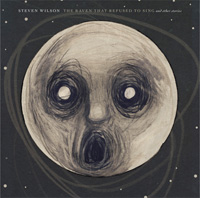
 The Raven That Refused to Sing (and Other Stories) is the third Steven Wilson solo album, but where it differs from the previous two releases is that it was written to be performed with the musicians who make up his touring band. This gives a real cohesion to the album, which was produced by Wilson but features Alan Parsons as associate producer and recording engineer.
Steven Wilson’s albums, whether solo or with his main bands Porcupine Tree or no-man, have always been expertly produced. The Raven That Refused to Sing (and Other Stories) takes it up a notch, with the best sounding Wilson release to date.
A case in point is album opener Luminol. Devoid of vocals until nearly 5 minutes in, switching time signatures, bass-driven instrumentation and layered mellotron / piano all feature. The production allows the instruments the space to breathe, and there is no brick-wall mastering in evidence.
At times reminiscent of Yes, Luminol sets the scene for the rest of the album, which is a mixture of progressive and classic rock.
Drive Home is one of Wilson’s best songs to date. Like a modern-day Stars Die, layered harmonies, strings and acoustic guitar underpin a tale of loss and regret.
“Well love can make amends
While the darkness never ends
You’re still alone
So drive home”
Drive Home is the one track on the album that really harks back to that mid-70s LA classic rock feel, and ends with a breathtaking guitar solo from the newest member of the Wilson live band, Guthrie Govan.
The Holy Drinker is one of the darkest songs on The Raven That Refused to Sing (and Other Stories). Featuring some wonderful interplay between Theo Travis and Adam Holzman, the first few minutes of the song wouldn’t sound out of place on Wilson’s previous album, Grace for Drowning. But it then mutates into a mid-70’s classic rock Deep Purple / Pete Townshend / Yes hybrid. Speeding up and slowing down, crossing genres at will, it’s clear that playing together over recent tours has really helped this group of musicians gel and become much more than a backing band.

The subject matter for the album’s lyrics also help make the album a complete piece, like in those distant days when album’s were made to be heard in one sitting, not split into easily digestible iPod-friendly chunks. Drawing on inspiration from 19th Century ghost and supernatural writers such as Edgar Allan Poe, the lyrics touch on subjects such as the spirit of a busker who continues to play (badly) long after his body departs this earth (Luminol) and a man who is haunted by the ghost of his wife whose body he buried under the floorboards (The Watchmaker).
The Pin Drop has a real Martin Grech feel about the arrangement, and contains the wonderful line, that sums up the theme of the album:
“I have not lived and loved enough”
It’s the shortest track on the album, and one of the most immediate and powerful. Lyrically almost a companion piece to Porcupine Tree’s Heartattack in a Lay By, both sets of lyrics touch on regret and sadness as someone’s life reaches it’s premature end.
The Pin Drop is one of the tracks that I keep coming back to and one which would make a fine single – although do singles exist anymore?
The Watchmaker will probably appeal most to fans who lean towards progressive rock. A slowly building pastoral sounding arrangement for the first quarter of the song, before the organs and percussion up the pace. The mighty Nick Beggs really shines on this track.

The Raven That Refused to Sing is the album closer, and what a beautiful way to end the journey. Starting off like a track from Storm Corrosion, before developing into the song that will surely be a staple of Wilson’s live shows for many years to come.
I hear hints of Radiohead and Sigur Ros in the arrangement, but also a flavour of Wilson’s first solo release Insurgentes. It’s an incredibly moving song that hits you really hard the more you hear it.
“Sing to me raven
I miss her so much
Sing to me Lily
I miss you so much”
If you don’t shed a tear as the song reaches it’s climax, you have no heart, no soul, and you should leave my blog now!
The deluxe version of this album includes a CD of demo versions of all the songs – obviously Steven Wilson demos are the quality of most people’s finished albums, but they offer a fascinating insight into the albums development and show what an impact the musicians and Alan Parsons made to the finished release.
Album of the year already? It depends on what else comes out over the next 10 months, but I think it’s safe to say that The Raven That Refused to Sing (and Other Stories) will be on my list come December 2013. A Wilson career best? Yes, it’s up there with no-man‘s Together We’re Stranger for me, and is already shaping up to be my favourite Wilson solo release.
The only negative for me (which I touched upon in my Grace for Drowning review) is that the freedom Wilson seems to be really enjoying in his solo work means I really don’t see Porcupine Tree reconvening anytime soon. I hope I’m wrong, as Porcupine Tree are one of my favourite bands, but with albums of this quality, the blow is somewhat lessened.
Watch the video for The Raven That Refused To Sing:
The Raven That Refused To Sing (And Other Stories) is released by Kscope on 25 Feb 2013.
You can buy The Raven That Refused to Sing (and Other Stories) in various formats, including vinyl, from the official Steven Wilson store on Burning Shed.
Buy The Raven That Refused to Sing (and Other Stories) CD on Amazon UK

Buy The Raven That Refused to Sing (and Other Stories) Bluray on Amazon UK

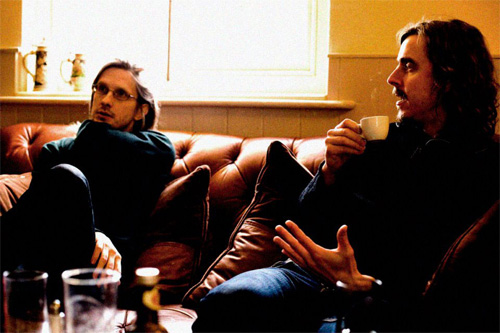

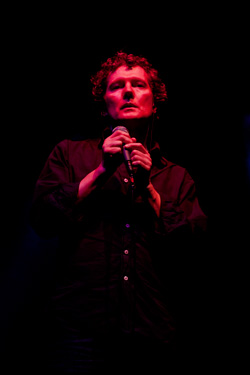 time travel in texas is another song from the mid-90’s Wild Opera album, with the 2011 live version losing it’s scratchy Portishead trip-hop atmosphere, mutating into a brooding, twin-guitar heavy assault.
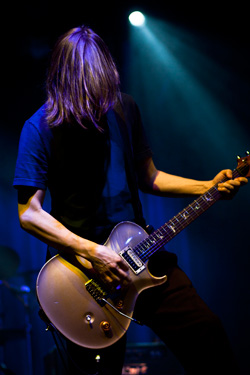 beaten by love is a previously unreleased no-man track, written in 1987 and performed for the first time at this show. The track displays hints of some of the darker This Mortal Coil tracks mixed with a healthy dose of Siouxsie & the Banshees, and is unlike any recent no-man material.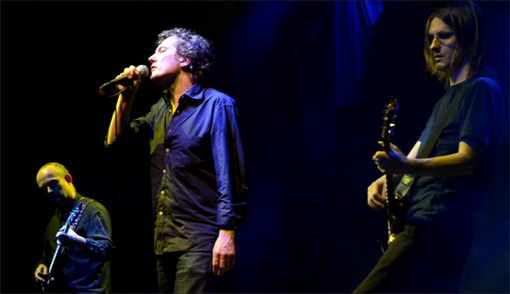
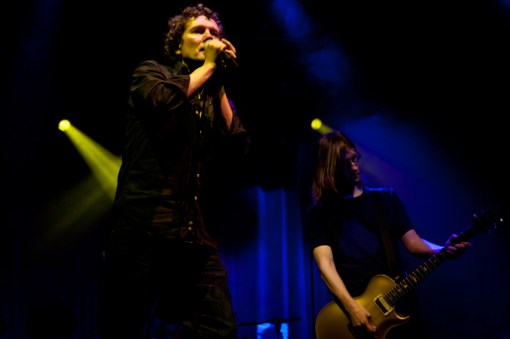
 The 2008 Bush Hall show was certainly a memorable and emotional evening, captured perfectly by Richard Smith’s excellent mixtaped dvd. But for me, the real no-man experience was this magical 45 minutes at Leamington Spa. I’ve seen hundreds of different live shows across many genres, committing many individual live performances to memory, and of all these performances I have seen since my first live show back in 1979 (Thin Lizzy at Hammersmith Odeon, in case you are wondering), I have compiled a list of my favourite gigs (Thin Lizzy never made it into the top 10, though it was a great first gig). Vivid memories of performances by the likes of The Stranglers at The Rainbow, The Police at Lewisham Odeon, Kate Bush at the London Palladium, The Who at Wembley Stadium, Prince & the Revolution on the Parade tour, Nine Inch Nails a couple of years ago and more, have now been joined by this no-man show.
 pretty genius (the third wild opera song of the evening, and no-man’s least popular album according to Tim) felt more like the album version, mainly due to the more powerful drum sound, and then there was lighthouse. A key track on the returning jesus album (and the band’s most “progressive” song) lighthouse retains its power and beauty in a live format, and the instrumental coda after the organ break always sends me somewhere. If they had played just this one track, I would have still left the venue a happy and content man.
 Grace For Drowning is the second solo album from Steven Wilson (Porcupine Tree / no-man). Whilst his debut release, Insurgentes (2008) seemed to draw inspiration from the post-Punk era, Grace For Drowning has a wider palette of sounds, and harks back to the late 60’s, early 70’s for inspiration, especially in drawing influence from film scores (Belle De Jour ) and some of the more jazz-rock experiments (Remainder the Black Dog).

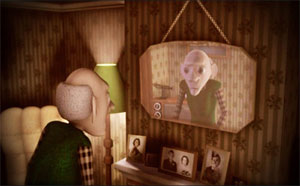
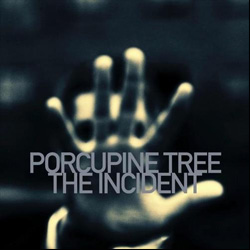 Much has been made of the song-cycle approach of disc 1 of Porcupine Tree’s new album, The Incident, and how Steven Wilson wanted the album to be treated as a whole.
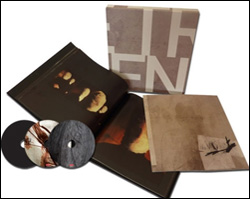 The limited edition special edition of the album (the most expensive album, by far, that I have ever bought, so my credit card statement regularly tells me!) comes with the 2 disc CD of The Incident plus a stunning 5.1 mix on DVD, and a 116 page hardback book that includes lyrics and Lasse Hoile photography, and a 48 page softback book of drawings inspired by the album by Hajo Mueller. Carl Glover, who produces the excellent artwork for no-man, is responsible for the graphic design.


 Mr Kinski's Music Shack