Fader – First Light

22 06 2017

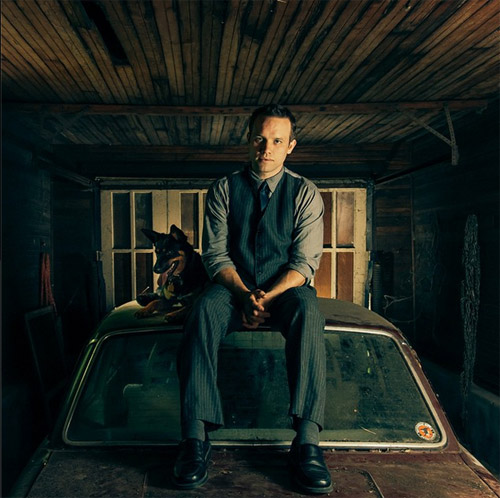
FaderFader are Neil Arthur (Blancmange) and Benge (John Foxx & The Maths / Gazelle Twin). They have released their debut album, First Light, on Blanc Check Records.
First Light is a dark, simmering electronic album. The music sits somewhere between Cabaret Voltaire and early (pre-The Garden) John Foxx. And that’s a good place to be.

3D Carpets is driven by analogue synths and minimalist percussion, with a chorus that soaks into your brain. I don’t have a clue what Neil Arthur’s lyrics are about on a lot of the songs – but I love the images they conjure up,  they paint a picture that is open to personal interpretation. Its good to use your 21st century imagination.

Check The Power has a tense, paranoid vocal delivery from Arthur, and some fine, deep bass synth lines from Benge.

“You better go back”

I love the way the synths sound so dirty,  not like VST / emulations, the duo clearly use authentic machines.

There is a real depth to these meaty sounds. Way Out is a case in point – the sweeping synths shift from deep low to brighter high notes. At times I struggle to believe that this album was recorded in 2017, not 1979.

“Caught in the moment of doubt”

The title track continues the edgy feel, with Arthur shouting about “Catholic converters” and “Resume the search at break of day”. The track First Light reminds me a lot of John Foxx, have a listen below.

The marching percussion and thick synths on Wonderland conjure up memories of early OMD and very early Human League / Heaven 17. Over the first few album listening sessions, I grew to appreciate the stream of consciousness, quite dystopian lyrics. There is also a lot of humour on display here.

Liverpool Brick is a wonderful, beatless song. The sparse but melodic instrumentation works really well with the lo-fi recording of the vocals. Liverpool Brick also contains my favourite lyrics on the album. Like the track, the lyrics are very direct (in stark contrast to the rest of the album).

A Trip To The Coast delivers one of the most memorable songs on the album. A real mood of melancholy and lost, fading memories permeate throughout my favourite track, which will surely appeal to the Stranger Things generation. I hope A Trip To The Coast is used to promote First Light, as I think it will be a favourite with a lot of people. Put this song on your SoundCloud, Fader!

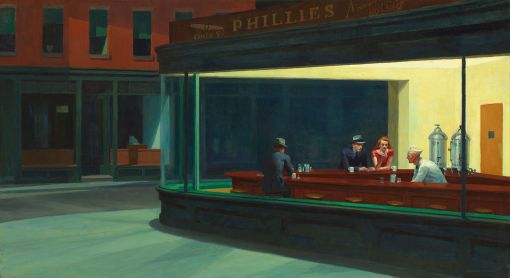
The album closes with another album highlight, Launderette. Apparently a “very British take on the solitary mood of Edward Hopper’s Nighthawks” (a print of which sits on my home studio wall, fact-fiends). Such a moving piece, with a metronomic delayed vocal delivered over a dark, simple synth-scape, and a throbbing low hum.

“In silence and silver, Ikea blue bag.
Washing away the stain, on our rags”

Nighthawks_by_Edward_Hopper

First Light is a fine debut release from Fader, and a must-buy for fans of late 70s, early 80s electronic music. I hope its the first of many releases from the electronic duo, as there are clearly lots of places left for Arthur and Benge to explore.

Follow Mr Kinski’s Music Shack on Twitter

Buy First Light by Fader (CD) on Amazon

Buy the album on Vinyl

or buy the album on mp3

Visit Fader on Facebook or follow the duo on Twitter


Sand – A Sleeper, Just Awake.

25 09 2016

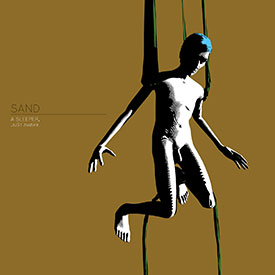
cover_275lA Sleeper, Just Awake is the second album from Sand, the solo project from Sam Healy of North Atlantic Oscillation (NAO).

I bought the first Sand album in 2013, and it didn’t grab me straight away, but I rediscovered it recently and its had lots of plays particularly the haunting A Pill to Keep the `plane from Crashing (a track so good it appears on the forthcoming North Atlantic Oscillation compilation).

So I was pleased to find out that a new Sand album is on the horizon. A Sleeper, Just Awake builds on the primarily electronic vein of the debut album, but has much more variety in its choice of instrumentation and hit home much quicker than the first album.

Mayfly is a powerful opener and a real beauty – with a stunning arrangement and percussion that reminded me of Talk Talk and Steve Jansen / late period Japan. As with NAO, there are twists and turns and a great use of power followed by restraint that keeps you hooked throughout the songs.

L.T.G.B. has intriguing lyrics (I can’t wait to see them in the CD sleeve-notes) and is presumably a play on the term LGBT.

“Comic opera brought you here, months too late”

One of the first things that attracted me to NAO was the complex, often manic drums that topped a modern, progressive sound palette. Sand offer equally ambitious percussion, mainly using drum machines, which adds to the different taste between the two projects. Commitment to the Bit reminds me a little of Danish pop proggers Mew. I love the almost overloaded mix on this track, as it breaks down to a synthy, reverb-laden middle section, as the brief respite allows you to appreciate the songs power.

The awkward time signature of Seldom Used Furniture adds to the tracks charm, and at the moment, its my favourite track on the album. A slowly evolving arrangement in a song devoid of an obvious chorus makes this song stand out as one of the albums key tracks. Every single time I play Seldom Used Furniture I silently exclaim to myself “those synths”. Its a stunning piece of music, and one of Healey’s greatest songs.

“Knock yourself out”

Talking of time signatures, berceuse is a style of composition that is a lullaby, usually in 6/8 time. Sand’s Berceuse is instrumental for the first half of the track, before deep, heavy instrumentation and vocals disturb the arrangement before it shifts back to its almost mantra-like song structure.

sand-logo-1024x288

Embers ushers in one of the albums more atmospheric arrangements. Sparse guitar and synth populate the verses, with an almost Beatles / Lennon like chorus.

Initial has a Nine Inch Nails meets David Lynch vibe, with danger and disquiet hiding behind the almost cinematic string arrangement.

“First I damage you, then you carry me”

The album draws to a close with its two longest tracks. Coward builds from swirling organ and a click-track percussion track into an arrangement that blurs the boundaries between Sand and NAO.

“We’ve come to rest, at the edge of the air”

One of my favourite parts of the album is the quiet section just after 4 minutes into Coward. An almost no-man, Returning Jesus sounding section – just drums, bass synth, piano and distant, discordant guitar carry the song to its final destination.

The album ends with its longest piece, Earth Mound Square. I love the mixture of hard-sequenced synths and acoustic instruments that drive the first section of this track. I’m a sucker for songs that mix electronic and natural sounds, so I was always going to be a fan of A Sleeper, Just Awake.

The arrangement shifts, sways and evolves slowly, maybe mirroring how landscapes evolve over time through the gradually changing seasons. The end section has some moving, minimalist lines that bring the album to its conclusion.

Earth Mound Square is a well-chosen ending to a beautiful, moving and varied album by Sand. A Sleeper, Just Awake is already well on its way to being my favourite release from the North Atlantic Oscillation / Sand catalogue.

A Sleeper, Just Awake along with Hannah Peel’s similarly titled Awake But Always Dreaming, must surely be a contender for best electronic album of 2016.

A Sleeper, Just Awake is released 30 September 2016.

Buy the album

Buy the CD / download directly from Sand

Buy the download on Amazon

Buy the first Sand album on Amazon

Buy North Atlantic Oscillation – Lightning Strikes The Library – A Collection from Amazon


Hannah Peel – Awake But Always Dreaming

11 09 2016

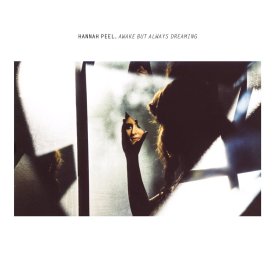
awake-but-always-dreamingAwake But Always Dreaming is Hannah Peel’s second solo album. Following on from the more traditional music of her debut album, The Broken Wave in 2011, the next few releases included two Rebox EP’s (made up of covers of songs by Soft Cell, New Order, John Grant and others using music boxes).

As well as working with John Foxx, Beyond the Wizards Sleeve and as a member of The Magentic North, Peel has released a series of increasingly electronic vinyl / download releases such as Nailhouse and 2014’s Fabricstate (with its moving lead track, Silk Road).

Awake But Always Dreaming is a natural continuation into a more electronic landscape. The album opens with recent single All That Matters, an upbeat (lyrically and musically) slice of hi-energy pop.

The pace of the album settles down with Standing On the Roof of the World, a slow-burning piece that ushers in the themes of the album – communication and the most emotive thread running through the songs, the effect that dementia has on people and how it impacts on their close relationships.

Hope Lasts feels like a potential single – the hook sticks with you long after the song has finished.

Tenderly has a potent mix of acoustic piano and electronics, and as the song progresses, I’m reminded of Vespertine era Björk (mainly in the glitchy percussion and deep synth lines). Tenderly is one of the album’s strongest tracks, and always a pointer of a good song – it would be just as moving if stripped back to its core components of voice and piano.

The lyrics start to take a darker turn at this point, and the music reflects this change in mood. Peel’s vocals on Don’t Take It Out On Me have an undercurrent of coldness and repetition that perfectly reflect the anger and resentment in the lyrics. As someone who is currently watching a loved one disappear under the cloud of dementia, this song hit me very hard.

“Wherever you have been, I am made of stone”

Photo by Adam Patterson

Beautiful piano lines drift in and out of focus during the intro to Invisible City, with moving lyrics that touch on the feelings of someone engulfed by the over-powering and all-encompassing illness.

“I built this city around my body, these walls they hold me, like you once did”

Even though Awake But Always Dreaming is clearly an album informed by Peel’s experiences with her Grandmother and her illness, it works on so many other levels. The lyrics are not so specific that it won’t mean anything to you if your life has not been touched by memory loss or dementia. If you’ve felt loss or loneliness in any form, the songs on this album are likely to resonate.

Awake But Always Dreaming is a well sequenced album. The instrumental Octavia almost feels like a musical nightmare, with what sounds like a Kate Bush / The Ninth Wave referencing whispered “wake up” towards the tracks end.

The album’s closing pieces seem to play out to the increased fog of confusion in the disjointed beats and vague whispers. Awake But Always Dreaming‘s title song references a life now often focused on the past, not the present and certainly not on new, shared future memories. Musically, its the most disturbing arrangement on the album and is a powerful prelude to the album’s key track, Conversations.

With what sounds like a projector running in the background (maybe showing film of the subjects past), ghostly memories drift in and out of focus as the film stops, and the lyrics begin.

“When I wake up, dont recall what happened yesterday”

Conversations is the highlight of Hannah Peel’s recorded output to date. An emotional, powerful vocal performance and a simple, direct and brutally honest lyric mark this out as the highlight of the album. There is no poetic licence in the words, no attempts to romanticise the situation, or to soften the blow. Its painful but so true.

“Where did you go?”

Foreverest is the albums longest track at just under 9 minutes. I love the ambitious arrangement on this track. There is a feeling of a release of tension on Foreverest as the journey nears its inevitable end.

Awake But Always Dreaming closes with the Paul Buchanan (The Blue Nile) song Cars in the Garden. Underpinned by Peel’s music box, this duet with Hayden Thorpe from Wild Beasts is an emotional finale.

“When you wake me up and say
All the love the others gave me
One day I could leave it all
And find the place that we forgot”

I hope this album starts conversations about memory loss and dementia. I will close by saying that in a time when NHS resources are stretched and people with dementia and their carers often feel unsupported and isolated, there are great organisations that can help – such as the charity Dementia UK , who support families through their specialist Admiral Nurses. Feel free to donate to the charity if you can.

And of course, buy Hannah Peel’s wonderful Awake But Always Dreaming album.

Buy the Awake But Always Dreaming CD on Amazon (includes mp3 autorip)

Buy the Awake But Always Dreaming vinyl LP on Amazon (includes mp3 autorip)

Buy Rebox on Amazon

Buy Rebox 2 on Amazon

Buy Fabricstate on Amazon

Buy Nailhouse on Amazon


Department M – Deep Control

9 04 2016

Deep ControlDeep Control is the first full-length album release from Department M.

Department M is Owen Brinley (former Grammatics singer / guitarist) and drummer Tommy Davidson. They are joined on the album by vocalist Snow Fox, James Kenosha and Lins Wilson.

I was a fan of Grammatics debut album – especially the songs Relentless Fours and Inkjet Lakes, so have been looking forward to the first Department M album, and it does not disappoint.

Department M dial up the electronics on Deep Control, and inhabit the space vacated by Songs of Faith and Devotion era Depeche Mode. Guitars are not the driving force in Department M, they are more atmospheric and layered and work well with the powerful drums, deep bass synths and intricate keyboard lines.

Bad Formulae is an early example of how Brinley’s voice and songwriting has progressed over the past few years. The pace and mood shifts from soft to menacing in the blink of an eye.

Bleak Technique is propelled by some great interplay between the bass and drums, as well as joint vocals from Brinley and Snow Fox. I love the goth-like guitar lines that precede the chorus.

Watch a (very different from the album cut) but moving nonetheless live solo performance of Bleak Technique below…

Kill My Superstition takes a few listens to get under your skin, but this song of addiction, with it’s nagging flute / synth line pays dividends after repeated plays.

“Kid sister morphine, you blaze a trail, from neon carriages sirens exhale”

Stress Class is the nearest to the sound of Brinley’s former band. But the album really shifts up a gear with Air Exchange,  which is easily one of my favourite tracks on the album. I love the changes in pace and the duel vocals. A lot of electronic bands rely too much on processed percussion – Department M having a non-VST driven drummer adds a real sense of power and urgency to these performances.

“Help me forget myself, how hard could it be?”

Department M

Deep Control, Pt. 2 is a gorgeous late-night torch-song, that reminds me a little of Flat Earth era Thomas Dolby. The album was recorded at The Lodge, Bridlington, as was the final Lone Wolf album from last year. The sound of the studio, which ran deep through the Lone Wolf album, can  really be felt on this track.

Linear features a strong electric bass-line, and as the synths break-down, the second section of the song is the most powerful piece of music on the album. Linear ends on an almost post-punk note, it’s a wonderful track.

“trace the vapour trails above, so linear.”

Compulsion is the album’s closing piece. A perfect storm of hard sequencers, off-kilter jazzy sax lines and a nagging guitar riff push the track, and the album, to it’s conclusion.

Deep Control was made to be played loud, so download the album, and do just that

Buy Department M – Deep Control on Amazon


Laura Groves – Committed Language (EP)

18 02 2015

committedThis is Laura Groves second EP, the follow-up to 2013’s dreamlike Thinking About Thinking (EP).

You might be aware of Laura’s previous work as Blue Roses, and the often raw, inspired by the northern landscape acoustic songs from their 2009 debut (and only) album. The music released under Laura’s own name is much more layered and electronic, though still finding the space to add guitar and live bass to good effect on some songs.

EP opener Committed Language could have jumped straight out of your dusty old cassette copy of Now That’s What I Call Music 1984 – with it’s warm analogue Japan‘esque synths, and off-kilter percussion. I hear some of the playful song-arrangements of Todd Rundgren, and the electronic experimentation of Chimera era Bill Nelson in some of Grove’s recent material, and Committed Language is no exception to this.

Dream Story has grown from the demo version that I heard online around 3 years ago, and is now driven by production (especially the bass and drum machine) that recalls Fleetwood Mac‘s Tango In The Night. Dream Story takes a few wonderful diversions along the way, and the lead-in to the chorus is as smooth as the world’s smoothest thing. And that’s smooth.

Have a listen to a stream of the song from Laura’s SoundCloud page below.

Friday is a piano and rhodes ballad, that slowly builds as sugar-sweet backing vocals flit around the lead vocal. The most direct arrangement on this 4 song EP, and a moving song.

lgroves

The EP closes with Mystique, a slow-burning jazzy track. Hazy chorused guitar washes through a song Steely Dan would be proud of (if they didn’t spend 45 years perfecting the reverb on the snare). Mystique repays your faith after repeated listens, as new highlights make themselves known to you as this haunting song really gets under your skin.

I recently bought a wonderful yacht pop / yacht rock compilation called Too Slow For Disco, and the tracks on this EP would not have sounded out-of-place in that era, the magical period between 1975 and the mid 1980s. The 80s are often described as being a light, superficial musical decade, but a lot of colourful, adventurous music was released during that time – it wasn’t all Wham! and Haircut 100.

The jazz inflections, bold arrangements and synth / rhodes layers give the music on this EP a warm, nostalgic identity that fits the sad songs on Committed Language. Now, where is that album Laura?

“I think I’m ready now, bring back the mystery…”

Buy Laura Groves – Committed Language (EP) on bandcamp

Buy the Blue Roses CD on Amazon


Gavin Castleton – It Was the Worst of Times, It Was the Worst of Times EP review

12 10 2014

It Was the Worst of Times, It Was the Worst of TimesPortland’s Gavin Castleton has released a new 5 song EP via his BandCamp page. The EP is a collection of songs about unconditional love and loss, but with a twist. If you’ve followed Gavin’s music over the years, you will know who he is singing about, and I won’t need to explain.
If the language of love is universal, then the same thing can be said about loss, it crosses borders and species and it always cuts deep.

Underestimate Me is a piano (and 1950’s sounding guitar) ballad that sets the scene – welcoming the subject of the EP, and the playfulness of youth and the promise of the future is echoed in the instrumentation during the middle section, before the final two lines hit home, signalling that this is an EP reflecting on memories tainted by loss.

“So I’ll just remember how you made me forget the world all around me
while the world still reminds me of you.”

gavin2

Watering the Soil is a beautiful song, with the sounds of night-time crickets providing the rhythm to the saddest of sad songs.

“I put you in the ground tonight
out beside the house
by the window light”

Where is the Fire? is the darkest lyric on the EP, riddled with regret and wishing you could go back and re-live some of the better times.  I love the subtle reverb on Gavin’s vocals on this track.

Expensive Love is a much fuller arrangement than the live take in the video below, but the EP version makes it clear that this is simply one of the best songs Gavin has written.

Rhodes and a nagging beat drive the song, which has some wonderful Venus as A Boy recalling strings underpinning the later verses.

“But then you got much worse when I took the job –
I had to leave work late and get up at ungodly hours to get out of all the debts I owed.
Maybe you couldn’t see the man for the brand new clothes…”

If you have ever experienced deep loss – whether it was the loss of a parent, a relationship, or a close companion or friend, this song will surely resonate. There are no cliches in Expensive Love – no trite “I’m missing you” – the song serves up some of the raw truths of the cost of love, which can be paid in an emotional and a physical sense.

“I knew you had to go but didn’t know how much it’d cost me”

Image by Carrie Vonkiel

The EP ends on an uplifting song in Team Love – with it’s multi-layered vocals and hand-clap beats.

“I’ll be fixing up my inputs and my outputs
I will learn to love and be loved from any direction”

The change in mood at the end of the EP might suggest that if you are going through the worst of times now,  hang in there because you never know, the best of times could be just around the corner.

Gavin Castleton – It Was the Worst of Times, It Was the Worst of Timesbuy the EP on Bandcamp

Visit Gavin Castleton’s website.

If you’ve not heard Gavin’s music before, take a listen to his cover of Frank Ocean‘s Swim Good (mixed with the sublime Roads by Portishead).

I also recommend the Home (a zombie love story or is it?) and For the Love of Pete albums as good starting points in your journey. You will become hooked, trust me!


Laura Groves – Thinking About Thinking EP

29 09 2013

"Thinking About Thinking" EPLaura Groves (who previously recorded under the moniker Blue Roses) has released her first new solo material since 2009, with the digital (and vinyl) release of the Thinking about Thinking EP on Deek Recordings.

The opening track, Inky Sea, has a real late night feel, with the dark rhodes piano and layered 80s keyboards reminding me of Cliff Martinez‘s Drive soundtrack.

The music has progressed from 2009’s mostly acoustic Blue Roses album, and benefits from a much wider production palette.

After the beatless opening song, Pale Shadows is driven by a tight drum machine track, and back to the 80s again, has hints of China Crisis The Cocteau Twins in the instrumentation, topped off with a very Robert Smith like guitar riff. It’s probably my favourite of the 4 tracks, with hints of Fleetwood Mac in the chorus (always a good thing!)

Sadly, a by-product of the post-CD age, it’s impossible to tell who is playing on the tracks as there are no liner notes with this digital release.

“When the walls break down, it’s a beautiful thing”

Laura Groves

Easy Way Out sneaks in a crafty bossa-nova beat and a strong bassline to underpin the complex, ever-evolving arrangement, that grabs you after repeated plays.

The title track of Thinking About Thinking slows down the tempo of the EP, and has a real USA West-Coast vibe, with hints of mid-70’s Todd Rundgren seeping through to my wise old brain.

At times, the close harmonies remind me of Prince‘s sublime Sometimes It Snows In April from the Parade album.

I hope the EP is a taster for a new album in the not-too-distant future. If you liked the Blue Roses album, or are a fan of early Kate Bush, this EP will be something you will want to investigate, so go on, treat your ears.

Buy the EP

Buy Laura Groves – Thinking About Thinking EP from Bandcamp

Other releases

Buy the Blue Roses album from Amazon

Buy the Does Anyone Love Me Now? EP (featuring Grammatics) and the excellent First Frost Night on Amazon

Buy the I Am Leaving Single (featuring the wonderful Moments Before Sleep) from Amazon


Thomas Dolby – A Map Of The Floating City

13 11 2011

The last Thomas Dolby studio album was Astronauts & Heretics back in 1992, so to say A Map Of The Floating City is long-awaited is a bit of an understatement.

There have been a couple of live releases and re-issues in recent years (notably the wonderful collectors edition of The Flat Earth in 2009) but the silence with regards to new music was finally broken last year with a couple of digital EP’s available from the official Dolby website.  6 of the EP tracks appear on A Map Of The Floating City.  Whilst they work perfectly well as album tracks, it’s a slight disappointment that the album is not made up of more new music, but after such a long wait, it’s only a minor complaint.

Album opener Nothing New Under The Sun kicks off with a bassline that’s vaguely reminiscent of The Jackson’s Can You Feel It, and this is the only real nod towards the 80’s on the album.

“Hey any fool can write a hit
loop me a breakbeat baby I’ll tweak it till it fits”

A wonderful rhythm guitar line from long-time Dolby collaborator Kevin Armstrong drives the song.  The Princealike dirty bubbling synths introduce Spice Train, a track that sits better on the album (as a standalone single it never really hit me).  The Eastern promise of the strings and backing vocals work well with the travelogue lyrics.

Evil Twin Brother, with it’s New York fire sirens, Shaft guitars and themed lyrics really set the scene for the song.  Much like the way I Love You Goodbye from Astronauts & Heretics, with it’s crickets and thunder gave a real cajun flavour, Evil Twin Brother gives a real feel of the at times claustrophobic New York city vibe.

“They say that New York city never sleeps
But I think they’re only talking about me
it’s 3am and ninety-five degrees.”

The album is split into three themed sections.  The final track that makes up the first section (Urbanoia) is A Jealous Thing Called Love, a lovely latin-tinged song of regret and betrayal, featuring Bruce Woolley (co-writer of Video Killed The Radio Star with Trevor Horn and Geoff Downes of The Buggles) on backing vocals.

Amerikana is the second section of the album, which starts with Road To Reno.

“He was a crooked politician
she sold brassieres at Sears
he said he liked The Beatles
And she liked Tears for Fears” 

A tale of a Badlands styled road-trip, that’s never going to end with chocolates and flowers, although Mars bars get a mention in the lyrics.  The guitar has a real Dire Straits circa Communiqué era feel, which is apt as Mark Knopfler features a couple of tracks later.

The Toad Lickers is a banjo and jaw harp (from Imogen Heap) led song about  “a group of crazed eco-hippies in the Welsh mountains who get high on Bufo alvarius and creep into the local town after hours in search of munchies” according to Thomas on his website.  Glad he cleared that one up, as otherwise I’d have no idea what on earth this strange song is about. The track features backing vocals from Adele Bertei (who provided the soaring vocals on Dolby’s Hyperactive! from 1984, pop-pickers, not toad-lickers).

17 Hills is the longest track on the album, and is up there with Screen Kiss as one of my favourite Dolby songs.  Featuring the afore-mentioned Mark Knopfler on guitar, this evocative track always reminds me of the wide-open spaces of California, and the hills overlooking the urban sprawl of Los Angeles.  17 Hills features some lovely fretless bass work from Jeffrey Wash.

“The city rises on seventeen hills
seventeen hills from the Bay
The silhouette of those beautiful hills
is right at the end of this old stormdrain.” 

Love Is A Loaded Pistol ends this section of the album and is the most stripped back track, with just Dolby and a string section.  I’ll let Thomas explain the inspiration for this song:

“The idea came to me in a dream: I had a nocturnal visitation from Billie Holiday who traveled through time to give me a song lyric. Of course, I was amazed and I was overjoyed. She was in an evening gown and looking ravishing. She sat next to me and said ‘I’ve got a lyric for you.’ I said ‘Great, hit me!’ She said ‘Okay…..This time it’s love.’

I smiled awkwardly. There was a pause. Then I said ‘erm…. well it’s a bit crap, isn’t it?’ She looked dejected and asked why. I said there had to be half a dozen songs with that title over the years, not that any particular one sprang to mind. ‘Well you can make it cool, right?’ Suddenly the waking me got very upset with my dream me and interjected some diplomacy. I mean here I was with one of the greatest singers that ever lived, and I just told her her idea was crap. I started to say something like ‘Look, I’ll try to work your lyric in….’ but it was too late. Billie was fading and I felt myself waking up…”

Oceanea is the final themed section of the album, which starts with the song of the same name.  Featuring Eddi Reader on vocals, it’s a beautiful, haunting song that even includes what sounds to me like, shock-horror, some auto-tune effects on Dolby’s vocals, not in a Cher way you understand, but just a subtle inflection on certain words. The lyrics are the most moving on the album, and Oceanea is definitely the personal highlight of the album for me.

Simone, with its theremin intro from Bruce Woolley, has a lyrical twist that I won’t give away here, and at times reminds me of Aja period Steely Dan or maybe even early Prefab Sprout (who Dolby first worked with on the Steve McQueen album in 1985).

The album ends with To The Lifeboats, with its lovely rolling drums from Pat Mastelotto and haunting acoustic guitar, sounds of the sea and a not very positive end for the subject of the song, by the sounds of things.

Hopefully the warm critical response to this album will mean there won’t be such a long wait until the next Thomas Dolby album.

Buy A Map Of The Floating City at Amazon UK

Buy The Flat Earth at Amazon UK

Buy The Golden Age of Wireless at Amazon UK

Buy The Sole Inhabitant – (+DVD) at Amazon UK

Buy Astronauts & Heretics at Amazon UK

All lyrics © Thomas Dolby

All A Map Of The Floating City videos on this page taken from the official Thomas Dolby YouTube channel.

Thomas Dolby website 


Memories of Machines – “Warm Winter”

17 05 2011

Memories of Machines is a collaboration between no-man vocalist Tim Bowness and Giancarlo Erra from the Italian band NosoundMemories of Machines formed in 2006, and Warm Winter is the band’s first release.

“Stories
Come out of other stories
Lead to other stories
New memories of machines”


The album opener, New Memories of Machines sets the scene for the album, which is a mix of electronic and acoustic sounds, making an album of songs alternating between traditional and ambient / classical arrangements.  The album kicks into life with the second track, Before We Fall, with a powerful interplay between the acoustic and electric playing of Giancarlo, and backing vocals from All About Eve’s Julianne Regan.

“It’s not love how you see me
It’s not love how we touch”

Regular Bowness listeners will already be familiar with Beautiful Songs You Should Know, which appeared on no-man’s Schoolyard Ghosts album from 2008, as well as an earlier Nosound version in 2006.  The Memories of Machines version has a more organic feel than no-man’s take, and is driven by Marianne de Chastelaine’s emotive cello lines.

There is a lot of optimism in the first set of songs on Warm Winter, almost as if the early part of the album maps out the formative stages of a relationship (playing a prospective lover the songs that have defined your life to date, moving to an unfamiliar city, “Trading the ghosts for someone new”) and as the album progresses, the songs document the cracks that appear in the relationship.

Warm Winter is a piece of rare beauty, and I’m sure will be an album highlight for a lot of people.  It’s also possibly the most uplifting song sung by Bowness to date.  I personally find that sad songs are the ones that usually affect me emotionally, but Warm Winter is a rare exception to that rule.  Whilst it is certainly not a KC and the Sunshine Band soundalike, it is uncharacteristically positive.  The track also has one of Tim’s finest vocal performances, with echoes of mid-period Bowie in the vocal phrasing and ending with a powerful guitar solo (one of the few on the album) from Giancarlo.

The optimism starts to peel away with Lucky You, Lucky Me, and the appearance of the mellotron heralds an appearance from Steven Wilson (no-man / Porcupine Tree), who also adds guitar to the track, in addition to his role in mixing the whole album.  One of the highlights of the Warm Winter album is the mix, and the man Wilson (as usual) does not disappoint.  A lot of attention has also gone into the sequencing of the album, and it deserves your full attention, sounding at it’s best played in the way the band intended you to hear it, not with the songs scattered with no care all over some random playlist.

“I take my words
And use my words
To heal the hurt and the blame.”

Change Me Once Again is a tale of control and compromise, with a haunting chorus lit up by a simple piano riff and the layered vocals of Julianne Regan.

Something In Our Lives features an appearance from OSI / Fates Warning’s Jim Matheos, whilst Lost And Found In The Digital World is built over Robert Fripp’s soundscapes and haunting trumpet from UMA’s Aleksei Saks, giving the track a Brilliant Tree era David Sylvian feel.

“Lost and found in the digital world.
Lost and found.
It’s time for letting go.”

Schoolyard Ghosts is a solo Bowness composition that was originally destined for the last no-man album of the same name, and although the song didn’t appear on the no-man album in the end, some of the tune leaked into no-man’s Mixtaped.

Add to this the performances on the track from recent no-man live band members Michael Bearpark, Stephen Bennett, Andy Booker and long-term Bowness collaborator Peter Chilvers, and the track Schoolyard Ghosts will sound familiar to most no-man listeners.

“You and Jules down vodka shots
To hide the feelings that you’ve got.
You love her eyes, you love her mouth,
You love her put on Rock-chick pout.”

An intensely personal Bowness lyric and the only track with real progressive leanings (the keyboard solo recalls …And Then There Were Three era Genesis), Schoolyard Ghosts has some wonderful interplay between the musicians.

“The schoolyard ghosts that haunt your dreams,
Hold you back and make you feel unclean.”

As the final note fades, the album’s closing piece, the nearly 7½ minute long At The Centre Of It All slowly fades into view.  This track became my instant favourite when I first heard the album, and my opinion hasn’t changed many months later.

A mostly electronic piece, with suspended piano notes and deep cello cutting through the glacial strings, a delay-heavy Bowness vocal intones

“All the things that were meant to be,
All the love you were meant to feel,
Became too hard to reveal.”

Porcupine Tree’s Colin Edwin contributes double bass to the song, as Giancarlo’s restrained guitar bookends the deep synth lines, as the “Beautiful Songs You Should Know”  sadly become “Just pointless lists at the centre of it all.”

A moving end to a beautiful album.

Tracklisting:

New Memories Of Machines (1.31)
Before We Fall (5.12)
Beautiful Songs You Should Know (4.59)
Warm Winter (5.34)
Lucky You, Lucky Me (4.17)
Change Me Once Again (5.56)
Something In Our Lives (4.11)
Lost And Found In The Digital World (5.14)
Schoolyard Ghosts (5.32)
At The Centre Of It All (7.26)

Memories Of Machines is:
Tim Bowness – vocals, guitar on Schoolyard Ghosts
Giancarlo Erra – guitars, keyboards

Produced and arranged by Tim Bowness and Giancarlo Erra
Mixed by Steven Wilson at Nomansland
Mastered by Jon Astley at Close To The Edge

© 2011 Mascot Records

Buy Memories of Machines at Amazon UK
Buy Memories of Machines at Amazon US
Buy Memories of Machines from The Burning Shed