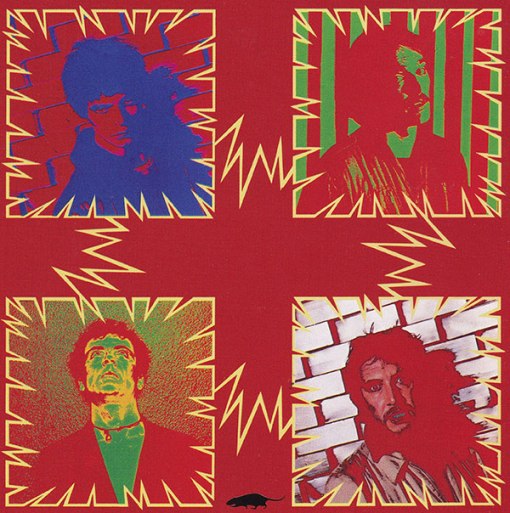
The Stranglers – The Classic Collection

6 03 2018

Take a stroll over to your CD cabinet. Do you have a copy of the first 7 albums from The Stranglers? Nope? Ok now is your time to rectify this. Parlophone have reissued the bands 1977-1982 studio albums under the name The Classic Collection.

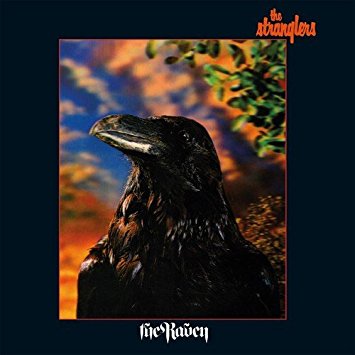
The Raven

These reasonable priced reissues (all single discs) have unfortunately not been remastered, which is a bit of a missed opportunity. So if you already own the albums, you will probably stick with what you have, but I would recommend purchasing the new expanded version of Live (X-Cert) which has an additional 8 previously unreleased on CD tracks from the original concerts at The Roundhouse in 1977 and Battersea Park in 1978. I dare you to listen to the version of Nice ‘n’ Sleazy from Battersea on this reissue without picturing in your mind the on-stage antics from the video. You know which one I mean.

If you don’t have the albums, The Classic Collection offers a quick and easy way to collect some of the finest albums of the late 70s / early 80s. Key non-album tracks from the period are included on each album, along with lyrics (that are more readable than previous CD releases), pictures from the era and a history of the band written by David Buckley (the same history appears in the sleeve-notes of each individual album).

The band’s debut album Rattus Norvegicus still sounds dangerous and raw, 40 years after its original release.

From the violence of Sometimes, the harsh beauty of Goodbye Toulouse through to the new wave classic Hanging Around, the band’s debut still delivers on so many levels.

Every time I hear Peaches, I’m transported back to my school-days, and album closer Down In The Sewer is a dripping with acid, punk-Prog powerhouse of a song.

1977 also saw the release of No More Heroes. The title track is one of the band’s enduring classics, but the album contains often overlooked tracks such as Bitching and English Towns.

This re-issue includes two of my favourite early Stranglers tracks, the edgy paranoia of Straighten Out and the precursor to the post-punk sound of the bands 3rd album, the single 5 Minutes.

“Got anything to say? No? Well shut up!”

1978 saw the release of the bands 3rd album, Black And White. To me, this was the best sounding Stranglers album. There is a real consistency that runs through every single song.

Always a great singles band, Nice ‘n’ Sleazy was one of their finest. Like the earlier Peaches, Sleazy is a mutated version of reggae that is simply a classic Stranglers single. Outside Tokyo slows the pace before the snarling Sweden (All Quiet On The Eastern Front).

All 4  band members sound amazing throughout this album – with my favourite Hugh Cornwell guitar sound and the mighty barracuda bass from JJ Burnel. There is a beautiful symmetry on the epic Toiler On The Sea, and this reissue is topped off by the inclusion of yet another classic Stranglers single, their cover of Bacharach & David’s Walk On By. Better than the original, yes I think so.

As I mentioned earlier, the 2018 re-issue of Live X-Cert is the definitive version. The album captures the band in their most raw state.

Highlights include an incendiary 5 Minutes, a venomous Straighten Out and a speed-driven Hanging Around.

The extra tracks include a breakneck speed version of Down In The Sewer, with Bitching, Peaches and my favourite live version of  Nice ‘n’ Sleazy.

My only tattoo is of The Raven logo on my arm, so you can probably tell that this is my favourite Stranglers album. One of my few regrets is that there was no official live album released from this period, as the band switched up to another level live in 1979-1980. Track down footage of the band from this period on YouTube, you will not be disappointed.

The title track is many fans favourite song. To my ears, The Raven features JJ’s best vocal and some wonderfully inventive guitar lines from Hugh, topped with a driving, almost jazz-like percussion track from Jet and inventive, rhythmic synth lines from Dave Greenfield, delivering an absolutely beautiful song that I never tire of hearing. And I’ve heard it a lot.

Although I followed the band from early 1977, I was not allowed to see them live (my parents hated the band!) until 1979, with their gig as special guests of The Who at Wembley Stadium in August 1979 being my first live MIB experience. Hearing songs from their soon to be released album The Raven was a great way to start a long list of memorable Stranglers gigs.

nmh

Anyway, back to The Raven. Ice and Baroque Bordello still send shivers, and the band did not let up with the string of classic singles, delivering two more in the shape of Nuclear Device and Duchess. This 2018 reissue also includes the single and extended mix of one of the bands best later period singles, Bear Cage.

The most experimental Stranglers album, (The Gospel According To) The Meninblack was released in 1981. Apparently featuring a guest appearance from some bloke called Charlie, this album heralded in the darkest period in the band’s history. Just Like Nothing On Earth still sounds like the future, and Two Sunspots really should have been released as a single. Second Coming has grown into my favourite song from the album over the many years since the albums release.

Another great single (which cost me 79p back in the day, fact fans) is included on this 2018 reissue – Who Wants the World, along with a track that was only available at the time on a US import album,  Vietnamerica.

The final album in The Classic Collection reissue series is from later on in 1981, La Folie. Most people will know this album from the huge hit Golden Brown, but the album offered much more than this iconic single. Let Me Introduce You To The Family may not have performed well in the charts, but it was a great single, and sounded amazing live. Tramp, with its powerful chorus, is the one that got away, and should have been the follow-up to Golden Brown.

Ain’t Nothin’ To It and The Man They Love To Hate were standout album tracks, and the fine production from Tony Visconti gives the band a new edge for the emerging decade.

So there you have it – a welcome reissue of the first 7 classic albums from one of the UK’s best bands.

Buy The Classic Collection on Amazon

Rattus Norvegicus (1977)

No More Heroes (1977)

Black And White (1978)

Live X-Cert (1979)

The Raven (1979)

(The Gospel According To) The Meninblack (1981)

La Folie (1981)


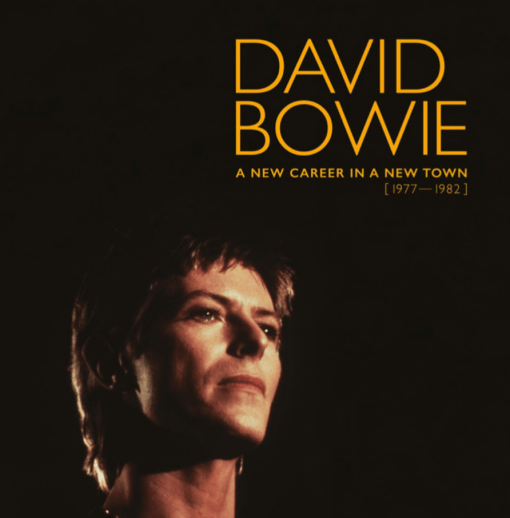
David Bowie – Lodger (Tony Visconti 2017 Mix)

30 09 2017

The 2017 Tony Visconti mix of Lodger comes as part of the A New Career In A New Town (1977 – 1982) box set released today (29 September 2017).

IMG_0116

Lodger was Bowie’s 13th studio album, originally released in May 1979. The last of the Berlin Trilogy, the album was recorded in Switzerland and New York with Brian Eno, and was produced by Bowie’s longest collaborator, Tony Visconti, who also oversaw this 2017 mix.

First of all I must confess that Station to Station and Lodger are my favourite Bowie albums, so this review is not a critique, but a review of how the album sounds in its 2017 mix.

The short version of the review is this: Lodger has never sounded so good. Ok, now for the longer review! It does not sound as if there has been much tinkering with the instrumentation or vocals on the album, just a reworking using modern technology and the original master tapes – so it’s a remix, not a remaster.

From the drum roll that ushers in Fantastic Voyage, it’s clear that this is a high-fidelity version of the album. The strings and backing vocals are much clearer in the mix and there is added reverb on the tail-end of the “cos we’ll never say anything nice again, will we” vocal line. Apparently the lyrics are about the possibility of nuclear war, so this song is more relevant now than ever.

There is some great piano work from the late Sean Mayes on this song. I can recommend Sean’s Life on Tour with David Bowie book, which gives an interesting account of life on the road with Bowie and the band on the 1978 Isolar II tour.

African Night Flight is also greatly enhanced by the 2017 remix – there is greater separation between all instruments, and the guitar and chanted vocals sit much more comfortably in the mix. The excellent Dennis Davis drum parts on Move On sound so clear, and as with most tracks on this new version of the album, reverb and delay treatments are added to Bowie’s vocals. The ending of the song reveals layers that I have not noticed previously, that were hidden in the original mix.

Yassassin sounds a million dollars. The guitar and drums (especially the kick drum) are pushed to the forefront, giving the track so much more punch and drive. It’s like discovering a whole new song. The same applies to the frantic Red Sails – the guitar and sax interplay is so much clearer. Some of my favourite guitar lines on the album can be found in this track.

I was particularly looking forward to hearing my two favourite Lodger tracks, DJ and Boys Keep Swinging, and the new mixes Sound very fresh. DJ sounds so much richer – the drums and keyboards, including the wonderful ARP Solina, plus the amazing Adrian Belew guitar solos towards the end of the song, sound better than ever.

The kick drum and bass guitar are so much punchier in Boys Keep Swinging. Renowned for some of the band members switching instruments, this track, released as a single, is in my top 10 Bowie songs. Around the 2.30 mark, there seems to be a high-pitched guitar line removed in this mix, which is a little disconcerting and one of only a couple of negative points in the 2017 version of Lodger.

Repetition has the most disturbing lyrics on Lodger, and the song is greatly improved by this remix. I love the odd bassline on this track, and the guitars sound so vibrant. Once again, there are elements that I have not previously noticed that are more visible in this new mix.

The album closes with Red Money, the album’s update of the Bowie / Alomar song that appears as Sister Midnight on Iggy Pop’s The Idiot album. The bass is deliciously bubbly in this mix, and the instruments, especially the drums and percussion, sound so good. The Comsat Angels sounding guitar riff at around 1.30 and 2.20 – one of the strongest parts of the song for me, disappointingly sits much further back in the new mix.

So whilst this 2017 Tony Visconti mix overall is a vast improvement on the original 1979 version of the album, I will still return to the original of some songs, such as Boys Keep Swinging and Red Money.

Other highlights (on top of some of Bowie’s finest albums) on the box-set include the extended version of Beauty and the Beast (I had not heard this version before) and my favourite version of Cat People (Putting Out Fire), the stunning Giorgio Moroder soundtrack version, which has one of the most emotional Bowie vocal performances.

“Its been so long, so long, so long”

The A New Career In A New Town (1977 – 1982) box set is my favourite of the three released to date.  The whole package includes the following discs (all remastered, apart from Scary Monsters) plus a hardback 128 page book with photos plus notes from Tony Visconti:

Low / “Heroes” / “Heroes” EP / Stage (original and 2017 versions of the live album) / Lodger / Lodger (2017 Tony Visconti Mix) / Scary Monsters (And Super Creeps) and the compilation Re:Call 3.

Buy “A New Career In A New Town (1977 – 1982)” CD boxset – on Amazon

Buy “A New Career In A New Town (1977 – 1982)” vinyl boxset on Amazon

Buy “Life On Tour With Bowie” by Sean Mayes on Amazon


Scarred For Life volume one: The 1970s By Stephen Brotherstone and Dave Lawrence

25 03 2017

OK, lets start with a confession. The 70s is my favourite decade. Its a decade that I lived through as a young ‘un (I was 10 in 1970) and saw me through to my first years as a young adult. It was the decade that provided some of the music that has seeped into my very soul, especially the mid 70s classic rock and the punk / post punk music from 77-79 that shook the establishment. So Scarred For Life volume one: The 1970s was always going to scream out READ ME, READ ME NOW. Oh and prepare to open your wallet – as you will probably find yourselves heading over to Amazon to buy lots of the DVDs and blurays of programmes you loved when you were young, or to eBay to pick up comics (old copies of Look-in) or other 70s memorabilia.
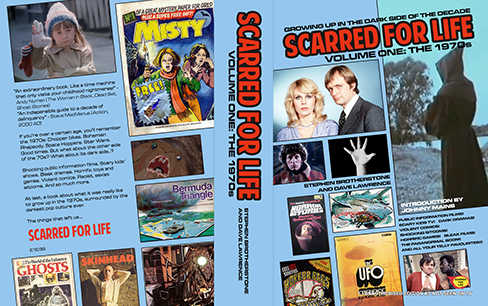
Scarred for Life Volume one: The 1970s

Scarred For Life volume one: The 1970s is a printed publication (740 black and white pages printed, with a free colour eBook version) that covers the decades weird and wonderful television (including favourites of mine such as The Tomorrow People, Sky, Survivors and A Ghost Story For Christmas), as well as a look at the changing face of UK TV culture. And that’s not all – the publication looks at board games – such as Top Trumps and Escape From Colditz, plus films and comics (including the mighty Action from 1976) as well as 70s fads and food (I had forgotten all about Horror Bags Fangs Crisps!). Oh and the array of 70s ice-lollies – no wonder I’ve spent so much money at the dentists over the years.

Scarred For Life volume one: The 1970s opens with an excellent scene-setting introduction by horror writer / historian Johnny Mains. Scarred by Television is the books first section. If you lived through the 70s, the memories are instantly sparked by the description of TV in that decade – no remote controls, tiny screens and few channels, compared to todays HD and hundreds of channels beamed into our homes through satellite / cable and on demand net based programming. On demand was not an option in the 1970s – in fact recording of programmes to watch later didn’t feature in most households until the 1980s. So TV watching was a much more communal event – everyone watched the programmes at the same time and discussed last nights viewing at school or work the next day. And if you missed the programme, or if it clashed with something else your family was watching on the homes ONE TV, that was it – no pausing, rewinding or catch-up TV. You simply missed it.

Programmes discussed in depth in the first few chapters include The Owl ServiceThe Ghosts of Motley Hall and one of my favourites, The Tomorrow People (which has a Bowie reference, fact fiends). Name that tune! The Blue And The Green Tomorrow People story has stuck with me all these years.
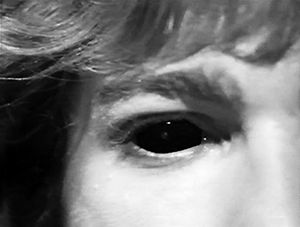
SkyOne of the most enjoyable parts of Scarred for Life is the coverage of the HTV series Sky. I remember watching and enjoying early episodes of this programme, but for some long forgotten reason, I never got to watch the whole of the seven part series. But I never forgot those terrifying black eyes…..

There is also a lengthy and informative section on Play For Today – including the haunting Blue Remembered Hills, which can be found on the Essential Dennis Potter boxset.

The sci-fi section of Scarred for Life includes the BBC post-plague drama Survivors. Much grittier than the (sadly cut-short after two series) more recent version starring Max Beesley, the original series lasted three seasons and went straight into my Amazon basket after reading about it in this book.

My favourite TV related section of Scarred for Life is the Gothic TV section – especially  the section on A Ghost Story For Christmas. I occasionally saw episodes during the 70s but bought the BFI DVD collection a couple of years ago due to the 2010 remake of the M. R. James story Whistle and I’ll Come to You, and dipping into this collection has become a Christmas tradition. The Scarred for Life piece goes into great detail, even mentioning the 1860s M. R. James origin of the Christmas Ghost stories that led to this wonderful BBC festive regular. I know its not Christmas as I write this review, but I think I’ll dip into the collection again this weekend. Charles Dickens is not just for Christmas, after all.

The How we used to live section discusses the way that some mainstream 70s TV dealt with race (the impact of ‘light entertainment’ shows such as The Black and White Minstrel Show and Love Thy Neighbour) and particularly the awful, lazy stereotyping in Mind Your Language. The section also discusses the “something for the Dads” casual sexism that was prevalent in Seaside Special / Top of the Pops and various sitcoms such as Doctor In The House and On The Buses. To their credit, the Scarred for Life writers don’t choose the easy “weren’t the 70s wacky” route in their discussions about these issues.

Scarred for Life takes an interesting approach to its lengthy Doctor Who section. Instead of focusing on the show and the stories, they take a fresh approach discussing what it was like being a fan of the show – writing about the Doctor Who Exhibitions and the eras Doctor Who annuals and magazines.

If, like me, you are of a certain age – the phrase “clunk click every trip” will mean you watched the multitude of public information films that ran through the decade, and they are discussed in loving detail in Scarred for Life. To this day, I’m still petrified of dumped fridges and ponds.
charleysays

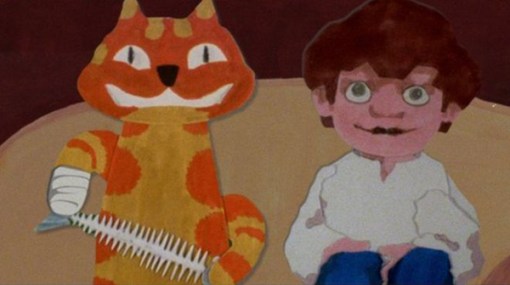
The section covers with Charley Says, The Green Cross Code and the downright terrifying Joe & Petunia (the coastguard animation still haunts me). Coo-ee!

I spent many happy hours playing Escape From Colditz as a kid in the early 70s. The board game was inspired by the popular TV series, starring Robert Wagner and David McCallum, that ran for two series between 1972 and 1974. It made a change from the endless magic sets and compendium of games that I received each Christmas. So I really enjoyed the children’s games section in this publication, that also covers Top Trumps, a card based game (I recall having lots of military and vehicle based sets – mainly tanks, jets and motorbikes).

The savage cinema section is well researched. Covering films such as Soldier Blue, Straw Dogs, Dirty Harry and the Death Wish series, the writers put these films in the context of the post-Vietnam, permissive society fighting Mary Whitehouse era. Classic films such as Martin Scorcese’s Taxi Driver and Deliverance are also covered.

The writers also delve briefly into the “When Animals Attack” late 70s film genre, mentioning Grizzly, but sadly no mention of one of my  (corny) favourites from the era – Day of the Animals. I saw Day of the Animals as a double-bill (what a great concept, bring it back!) at the cinema in 1977 with a great film called The Car, with James Brolin being pursued through the desert by a seemingly driverless Lincoln Continental (The Car is mentioned further on in Scarred for Life).

Another well-written section of the book are chapters given over to covering some of the satanic / possession films of the 70s. Covering less obvious choices, such as Dennis Potters Brimstone and Treacle (not to be confused with the later film version starring Sting) as well as the sort of films you would expect, Rosemary’s Baby, The Omen and The Exorcist, the writing is often focused on the public’s perception of the films rather than plot synopses, which is a fresh take on these much-discussed classic horror films.

I also found the folk-horror section interesting – as its a sub-genre I know little about, so feel inclined to explore further.

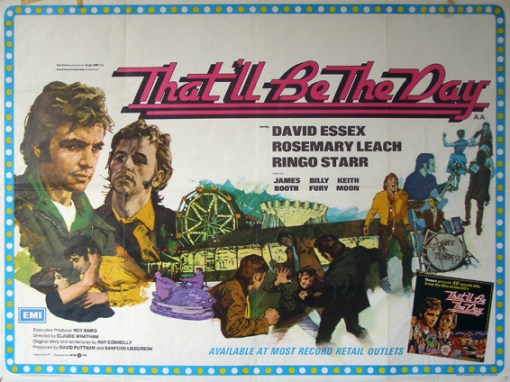
The Pop Movie Turns Dark covers the trio of pop films That’ll Be The Day, Stardust and Slade in Flame. I’ve never seen the Slade film but love the two David Essex films. I didn’t realise that That’ll Be The Day is based on Harry Nilsson’s song 1941, so thanks for that pop-quiz nugget, Scarred for Life.
thatll-be-the-day

The sections on 70s books and comics is the section I was looking forward to the most, and it did not disappoint. I bought several pre-ban issues of Action – I wish I’d kept them, as it was a ground-breaking comic that is covered in depth in this publication. And I had forgotten all about the Pan Book of Horror Stories – that turned me onto the work of Edgar Allen Poe and Bram Stoker among others. I was also a big fan of the early James Herbert books – The Rats is discussed in Scarred for Life, but my favourite was The Fog. I’ve still got my original copy and it still scares me to death. Its a shame there is not more coverage of James Herbert – he may not be regarded as being a writer in the same class as Stephen King in horror writing circles, but his books were extremely popular in the 70s and 80s for the very good reason that they were terrifying.

Scarred by… food. Horror themed ice-lollies (Lyons Maid Red Devils & Haunted House), Smiths Horror Bags crisps (I can taste them now!) and Golden Wonder Kung Fueys (bacon and mushroom corn balls mnnnn) are all on the menu in Scarred for Life. Oh how I miss the 70s.

There is an interesting chapter on UFO imagery used in 70s music, including Boston, ELO, The Stranglers and a fair bit about David Bowie‘s apparent fascination with aliens. The sections ends with the top 10 UFO songs of the 70s. I won’t give it away – buy Scarred for Life and see for yourself.

Scarred for Life is a great read for anyone who lived through the decade, or for anyone in love with the music, TV and films that poured out of this amazing period. The TV series Life on Mars gave a great flavour of the 70s, so if you loved that show, Scarred for Life will paint an even fuller picture of the decade. I am really looking forward to the next volume, that will cover the 80s. I can’t wait to read about the nuclear paranoia of that decade, especially the mighty Threads.

You can buy Scarred for Life Volume one – the 70s now as a 740 page perfect-bound paperback (the printed version comes with details of how to obtain the colour e-book version as part of your purchase).


Fleetwood Mac – Rumours [35th Anniversary 3CD Deluxe Edition]

2 02 2013

Fleetwood Mac - RumoursAn album I’ve previously bought on vinyl, cassette and CD, and now a 3 CD deluxe edition. So it’s clearly an album I like, along with over 40 million purchasers of this album!
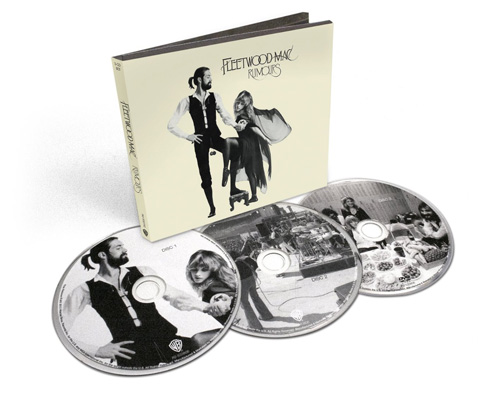
Disc one of the 3CD Deluxe Edition is the remastered version of the original album, including extra B-side track Silver Springs. This remaster is the 2004 one, which did not need improving.

Dreams is one of my favourite songs, I never tire of hearing this track. Unless it’s the version by The Corrs, who just lobbed a shed-load of flutes and an Everything But The Girl Missing beat over the top. Avoid.

Sorry about that – back to Fleetwood Mac. If you don’t own Rumours, and are a casual fan, the single disc version will be enough for you. If you are a die-hard fan, for a few pounds more, the 3-disc edition is the definitive version.

Rumours, originally released in February 1977, was a staple of FM radio in the late 70s, and you will be surprised at how many of these songs you know if you grew up in that golden era.

You Make Loving Fun is sprinkled with lovely harmonies, and driven by chunky rhythm guitar and crystal clear solos by Lindsey Buckingham.

Fans of Formula One racing on the BBC in the late 70s / 80s will recognise the iconic bass line towards the end of The Chain, one of the album’s strongest songs.

The remaster brings elements to the fore that I had missed on earlier incarnations, such as the highly percussive multi-layered guitar, and intricate harmonies (? underpinned by accordion) on Never Going Back Again.

This edition of the album ends with Silver Springs, which was originally the b-side to Go Your Own Way.

Disc 2 is a live collection, recorded during the 1977 Rumours tour in Oklahoma, Tulsa, Nashville and Columbia. Several non-Rumours tracks feature, the highlight being Rhiannon clocking in at nearly 8 minutes.

Another longer-than-the-album take is Gold Dust Woman, with its wonderful Rhodes v chorused guitar intro. The live Go Your Own Way has a great new-wave guitar intro, and the live disc ends with Christine Mcvie’s Songbird.

Fleetwood Mac "Rumours" 3-CD Deluxe Edition

Disc three is made of up alternative versions, demos and out-takes from the sessions. These tracks often contain tape hiss, sparse instrumentation, in-song chatter and are no way near the fidelity of the studio album. However, what they lack in audio quality they certainly make up for by offering a peek into the creative process.

My favourite is Dreams (take 2) – built around electric piano and rough guitar, the backing music sounds nothing like the album version, but the vocal melody is intact, and it’s a moving performance by Stevie Nicks.

Never Going Back Again [Acoustic Duet] is more fully formed than some of the tracks on disc three. Keep Me There [With Vocal] is interesting, as it includes the famous outro (a shortened version) that was later added to The Chain.

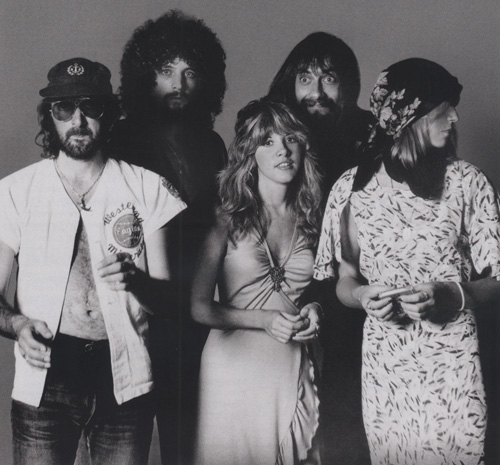
Fleetwood Mac

Silver Springs [Early Take] contains another fine Nicks vocal, and an echo laden backing track that differs enough from the finished version to make it an intriguing listen.

Planets Of The Universe [Demo] is a piano and vocals version of the track that later appeared on the Stevie Nicks Trouble in Shangri-La album. The lyrics are very raw and direct, and I prefer this version to the Trouble in Shangri-La studio version that was released in 2001.

I’m glad I bought this new version of Rumours – and I’m now embarking on a Big Mac of the Fleetwood variety binge. I’ve ordered the expanded Tusk re-issue and 25 Years – The Chain 4-CD compilation.

Buy Rumours [35th Anniversary Edition] – 3CD Deluxe Edition from Amazon

Buy Rumours [35th Anniversary Edition] – single disc edition from Amazon

Watch a live version of Dreams from 1977: